

Last reviewed and updated: August 19, 2026
HubSpot is one of the most recognized names in CRM and marketing software, but for most small and mid-sized businesses, the price tag tells a very different story than the product page does.
Once you move beyond the free tier, costs climb fast. And if you’ve ever heard the phrase “great software, if you have a bottomless piggy bank,” you already know why so many SMBs are looking for something better.
We’ve been there — and so have thousands of businesses who switched to alternatives and never looked back.
In this guide, we’ve independently reviewed 18 HubSpot alternatives across four categories: all-in-one platforms, marketing tools, sales CRMs, and customer support software.
Each tool was evaluated on pricing transparency, ease of use, free plan value, and how well it fits small and mid-sized businesses. Every pricing figure below was checked against vendor pricing pages and independent sources in August 2026.
Whether you’re switching from HubSpot or comparing tools for the first time, this guide gives you everything you need to decide.
Key Takeaways
-
-
- HubSpot is powerful but becomes cost-prohibitive for most SMBs once they scale beyond the free tier.
- EngageBay is the strongest all-in-one HubSpot alternative for small businesses — combining CRM, marketing, and support in one platform at a fraction of HubSpot’s cost.
- Zoho CRM is the best pick if deep customization and a wide app ecosystem matter most to you.
- ActiveCampaign leads for advanced email automation without HubSpot’s pricing complexity.
- Most businesses switching from HubSpot cite contact-based pricing escalation as the primary reason for leaving.
- All 18 tools reviewed here have been selected using consistent criteria: pricing transparency, free plan availability, ease of migration, and SMB fit.
- Several vendors on this list restructured pricing or plan names in 2026; including Pipedrive, Zendesk, Freshdesk, and Freshsales; so figures you may have seen elsewhere could already be outdated.
-
Quick Picks
| If you need… | Choose… |
|---|---|
| The best all-in-one platform at the lowest cost | EngageBay |
| Deep CRM customization and a wide app ecosystem | Zoho CRM |
| Advanced email automation above all else | ActiveCampaign |
| Enterprise-grade CRM with maximum scalability | Salesforce |
| eCommerce-specific email marketing | Drip |
| The best free alternative to HubSpot | EngageBay (Free Plan) |
| Omnichannel customer support first | Zendesk |
| Simple, pipeline-focused sales CRM | Pipedrive |
Prefer Video? Get the Highlights:
Exciting HubSpot Alternatives to Watch in 2026
In this detailed guide:
Table of Contents
Why Businesses Are Leaving HubSpot in 2026
(Where HubSpot Wins — and Where It Starts to Break Down)
Many businesses start with HubSpot excited about its polish and reputation and end up frustrated by how quickly costs escalate.
Here’s an honest breakdown of what’s driving that exodus. Before diving in, see our full review of HubSpot’s pros and cons.
Let’s start with a fair premise: CRMs don’t reach HubSpot’s scale by accident.
HubSpot remains one of the most widely adopted CRM platforms globally, and in 2026, it continues to set the benchmark for unified customer data, ecosystem depth, and go-to-market alignment.
It does many things exceptionally well—and for certain businesses, it’s still the obvious choice.
That said, the way companies buy and use CRMs in 2026 has changed. AI-assisted workflows, leaner teams, tighter budgets, and faster time-to-value expectations have reshaped what “good CRM software” actually means.
Our goal here isn’t to praise or criticize HubSpot blindly. It’s to clearly explain where HubSpot excels, where it becomes limiting, and why many businesses actively look for HubSpot alternatives today: so you can choose based on fit, not hype.
HubSpot’s Free Plan Is Still One of the Best Entry Points
HubSpot’s free CRM remains one of its strongest advantages in 2026.
You get:
-
-
-
Unlimited users
-
Up to 1,000 contacts
-
2,000 emails per month (with HubSpot branding)
-
Access to email templates, live chat, landing pages, newsletters, and basic CRM functionality
-
-
For startups and early-stage teams, this makes HubSpot an easy way to centralize contacts and start experimenting with inbound marketing—without upfront risk.
CRM pricing has increased 18–24% since 2023 across major SaaS platforms (mid-market inflation trend).
That said, most “free” features are intentionally capped. Advanced automation, reporting, customization, and AI-driven workflows remain locked behind paid tiers, which becomes noticeable the moment a business starts scaling.
In short: HubSpot’s free plan is excellent for getting started—but not for staying there.
HubSpot Makes the Most Sense for Companies Above ~$10M ARR
In 2026, HubSpot is best positioned as a mid-market-to-upper mid-market CRM, not a universal solution for every business size.
For companies generating $10M+ in annual recurring revenue, HubSpot becomes a strategic platform:
-
-
-
Centralized customer data across marketing, sales, and support
-
Mature RevOps workflows
-
Strong reporting and attribution
-
A single source of truth for growing, cross-functional teams
-
-
At this stage, businesses have the budget, headcount, and operational complexity to justify HubSpot’s pricing and implementation effort.
HubSpot also fits well for companies that have outgrown lightweight CRMs but don’t want the operational overhead of enterprise platforms like Salesforce.
However, for SMBs and lean teams, the cost-to-value curve rises sharply—often faster than revenue.
A True All-in-One CRM (When You Can Afford It)
HubSpot’s biggest strength remains its all-in-one architecture.
Marketing automation, sales pipelines, customer support, CMS, and reporting all live inside one ecosystem. When implemented well, this eliminates data fragmentation and reduces cross-tool friction.
As one user puts it:
“If you’re using three or four separate tools for marketing, sales, and service, your data gets messy fast. Customers feel the disconnect, and scaling becomes painful.”
This is where HubSpot shines—especially for growing teams that are tired of duct-taping tools together.
That said, in 2026, many businesses are asking a sharper question:
Do we need everything HubSpot offers—or just the parts that actually drive revenue?
For smaller teams, paying premium pricing for unused features often becomes the breaking point.
Well-Suited for Modern Revenue Teams
Modern companies no longer operate in rigid silos of marketing, sales, and support. In 2026, most teams follow a revenue or customer lifecycle model, where ownership flows across functions.
HubSpot is well-designed for this shift. Its shared data model, cross-team workflows, and lifecycle tracking make it easier to align around revenue goals rather than departmental metrics.
So yes—another point to HubSpot here.
But this same strength becomes a weakness when:
-
-
-
Teams don’t need deep complexity
-
Processes are simpler
-
Speed and affordability matter more than ecosystem depth
-
-
62% of SMBs now use 3+ revenue tools, making all-in-one CRMs more attractive than modular pricing.
The 2026 Reality Check
If you’re an established company with scale, complexity, and budget, HubSpot can still be a strong long-term platform.
But if you’re an SMB, startup, or growth-stage business:
-
-
-
Pricing escalates quickly
-
AI and automation features are paywalled
-
Many features remain underused
-
ROI becomes harder to justify
-
-
The good news? In 2026, you don’t have to compromise.
There are now several modern HubSpot alternatives that offer:
-
-
-
True all-in-one functionality
-
Faster setup and adoption
-
More predictable pricing
-
Better value for small and mid-sized teams
-
-
Contact-based pricing is the #1 churn reason cited by SMB CRM switchers in 2025–2026 surveys.
Is Switching from HubSpot Risky?
Switching CRM platforms doesn’t have to be a leap into the unknown. Modern HubSpot alternatives invest heavily in migration support, guided imports, and structured onboarding to make transitions as smooth as possible.
Today, most CRMs (including EngageBay and other mid-market tools) offer:
-
-
-
CSV or direct data imports from HubSpot and legacy systems
-
Guided migration wizards that map contacts, deals, companies, and custom fields
-
Onboarding support and setup assistance to help teams configure pipelines, automation, and reporting
-
Training resources and live help to minimize downtime and adoption friction
-
-
Because of these improvements, switching in 2026 is far less disruptive than it was even a few years ago.
With the right planning and vendor support, businesses can preserve data integrity, retain historical context, and get teams productive quickly, making CRM migration a structured, manageable project rather than a risky gamble.
18 Best HubSpot Alternatives at a Glance
| # | Solution | Pricing | Free Plan | Best Features | Best For | Support | Additional Costs |
|---|---|---|---|---|---|---|---|
| 1 | EngageBay | $13.79 – $110.39 | Yes | CRM, Marketing Automation, Sales | SMBs, Marketing Teams | 24/7, Live Chat | No hidden fees, all-in-one pricing |
| 2 | Brevo (formerly Sendinblue) | From $9/month (Starter) | Yes | Email, SMS, Marketing CRM | SMBs, Freelancers | Email Support | Logo removal add-on $9/month; pay-as-you-go SMS credits |
| 3 | Salesflare | $29 – $99 per user | No | Automated CRM data input, email tracking, LinkedIn/Gmail/Outlook sidebars | SMBs, B2B Sales Teams | Live Chat, Free Onboarding | No hidden fees or contact limits |
| 4 | Zoho CRM | $14 – $52 per user | Yes | Customizable CRM, AI-powered assistant (Zia) | SMBs, Freelancers, Enterprises | 24/7, Phone Support | Customization and onboarding fees |
| 5 | Salesforce | $25 – $165+/user/month | No | Industry-leading CRM, Custom Integrations | Large Enterprises | 24/7, Phone Support | Setup fees, customization fees, implementation $10K–$50K+ |
| 6 | ActiveCampaign | $15 – $145+/month (scales by contacts) | No | Advanced Automation, CRM | Marketing-heavy Teams | 24/7, Email Support | Custom training available, pay for add-ons |
| 7 | GetResponse | $0 – $69+/month | Yes | Email Marketing, Autofunnels | Startups, eCommerce | 24/7, Phone Support | Custom migration services |
| 8 | Drip | $39 – $699 | No | eCommerce Email Marketing | eCommerce, Online Retailers | Email Support | No hidden fees; all features included at every tier |
| 9 | Mailchimp | $0 – $299+/month | Yes | Email Marketing, Email Templates | SMBs, Marketers | Email Support | No hidden fees |
| 10 | Marketo Engage | Custom Pricing | No | Advanced Marketing Automation, Personalization | Enterprises, Marketing Teams | 24/7, Phone Support | Setup fees, custom pricing for API access |
| 11 | Freshsales | $0 – $59/user/month (annual) | Yes | AI-based Lead Scoring, Automation | Startups, SMBs | 24/7, Live Chat | Copilot AI add-on extra; onboarding fees for premium plans |
| 12 | Pipedrive | $14 – $79/user/month (annual) | No | Pipelines, Sales Automation | Startups, SMBs | 24/7, Live Chat | Automation gated above Lite plan |
| 13 | Insightly | $29 – $99 | Check insightly.com — free plan status has changed | CRM, Project Management | Enterprises, Sales Teams | 24/7, Phone Support | Onboarding and setup fees for enterprise plans; Marketing add-on required |
| 14 | SharpSpring | $449 – Custom | No | Sales Automation, Marketing Automation | Enterprises, Agencies | 24/7, Phone Support | Mandatory $1,999 onboarding fee |
| 15 | Ontraport | $29 – $249 | No | CRM, Marketing, Membership Management | Membership-focused Teams | 24/7, Live Chat | Setup fee for custom features |
| 16 | Zendesk | $19 – $115/agent/month (Suite) | No | Omnichannel Customer Support | Service Businesses, SMBs | 24/5 Phone Support | AI Agents billed per resolution above allowance |
| 17 | Help Scout | $0 – $75/user/month | Yes | Email-client-like Interface | Service Businesses, SMBs | 24/5 Phone Support | AI Answers billed per resolution |
| 18 | Freshdesk | $0 – $89/agent/month (annual; free limited to 6 months) | Limited | Scalable Customer Support | Service Businesses, Growing Teams | 24/7 Support | Freddy AI Copilot add-on extra |
18 Best HubSpot Alternatives: An In-Depth Look
We took an in-depth look at each of the HubSpot alternatives and competitors to help you choose the best solution for various needs.
The best all-in-one HubSpot alternatives
1. EngageBay
Best HubSpot alternative for an all-in-one solution
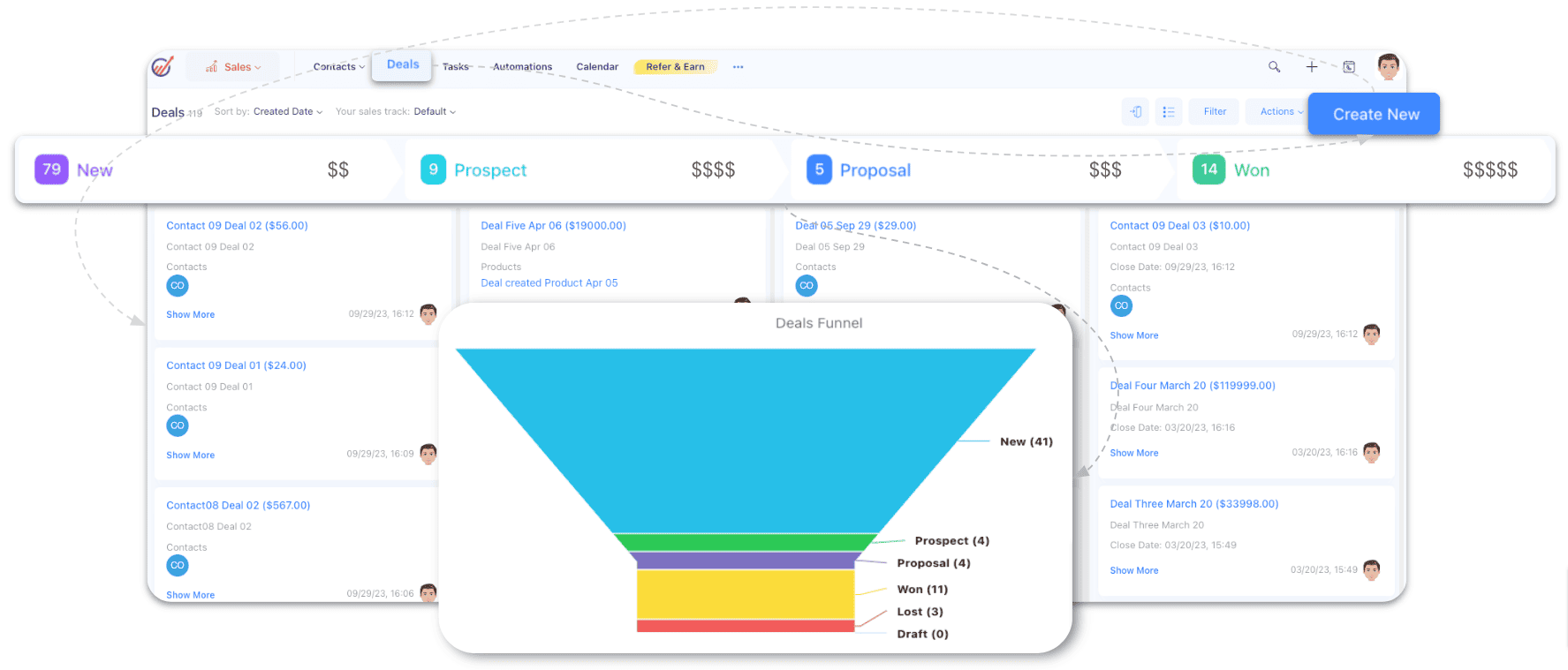
EngageBay is the most direct apples-to-apples HubSpot alternative for small businesses. It combines CRM, email marketing, marketing automation, landing pages, live chat, and a helpdesk — all in one platform — at a price most SMBs can actually afford. Where HubSpot bundles these features across multiple hubs with separate pricing, EngageBay gives you everything under one roof for a fraction of the cost.
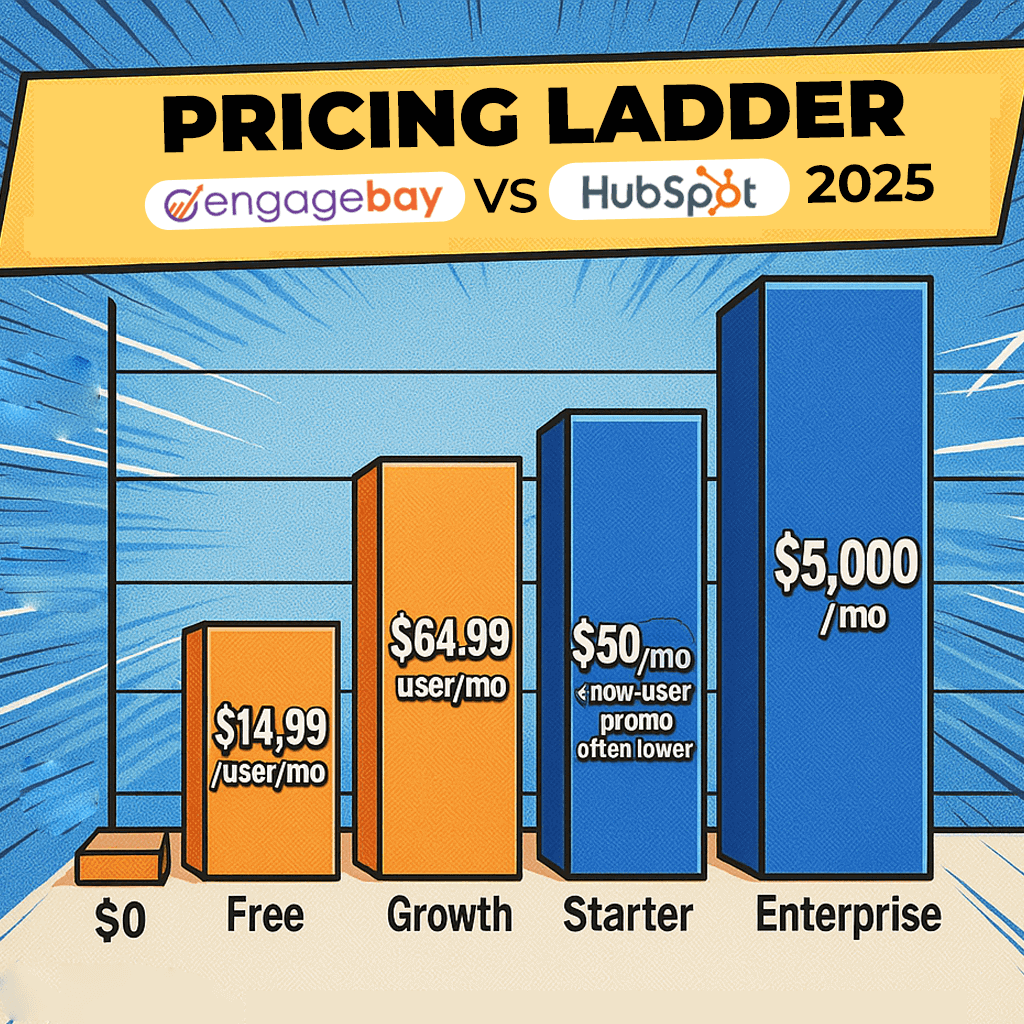
| Feature | EngageBay | HubSpot |
|---|---|---|
| Free plan contacts | 500 | 1,000 |
| Free plan users | 15 | Unlimited |
| Free plan email sends/month | 1,000 | 2,000 |
| All-in-one (CRM + Marketing + Support) | ✅ | ✅ (requires 3 separate hubs) |
| Starting paid price | $13.79/month | $20/month (limited features) |
What you’ll like:
-
-
- Includes CRM, email marketing, automation, landing pages, helpdesk, and live chat in every plan
- Free plan supports up to 15 users — ideal for small teams
- Transparent flat-rate pricing; no per-contact escalation charges
- Free 1:1 onboarding for all paid users
- Dedicated migration support from HubSpot
-
What you might not like:
-
-
- The interface, while intuitive, doesn’t have HubSpot’s visual polish
- Some advanced reporting features are more limited than HubSpot’s enterprise tier
- Smaller third-party app ecosystem
-
Pricing:
-
-
- Free: Up to 500 contacts, 1,000 emails/month, 15 users
- Basic: $13.79/user/month (billed annually)
- Growth: $59.79/user/month (billed annually)
- Pro: $110.39/user/month (billed annually)
-
“Switched from HubSpot 8 months ago. We’re saving $800/month and getting the same core functionality. The onboarding team held our hand through the whole migration.” — G2 review, 2025
Who should choose EngageBay?
Choose EngageBay if you’re an SMB or startup that needs the full HubSpot feature set — CRM, marketing, and support — without HubSpot’s escalating costs.
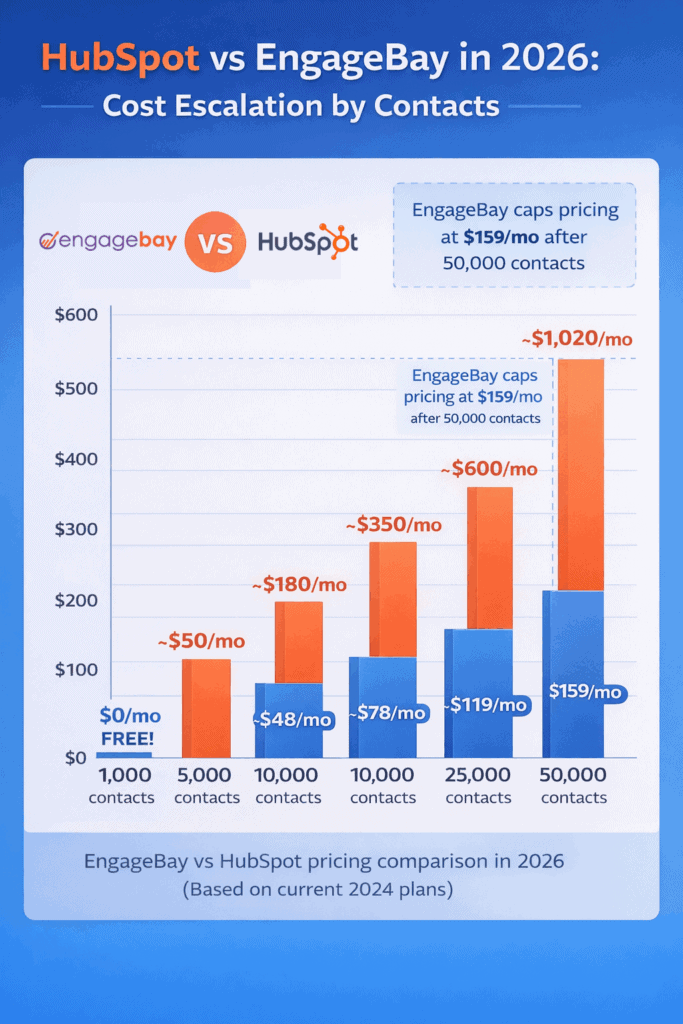
Unlike HubSpot, EngageBay does not penalize growth with aggressive contact-based pricing.
As your database scales, costs remain predictable—critical for SMBs and startups.
Learn more about EngageBay:
Sign up with EngageBay for free
2. Brevo (fka Sendinblue)
Best HubSpot alternative for omnichannel marketing
Our next pick for an all-in-one software to try over HubSpot is Brevo (fka Sendinblue).
A digital marketing resource, Brevo (Sendinblue) has served quite a few businesses for more than a decade.
Brevo rebranded from Sendinblue and has grown into a capable marketing platform.
It’s one of the most affordable email marketing tools on this list, with pricing based on email sends (not contacts) — which makes it an excellent alternative for businesses with large lists but moderate sending volumes.
What you’ll like:
-
-
- Pricing by send volume, not contact count — great for large lists
- Includes SMS and WhatsApp marketing
- Free plan allows unlimited contacts (with a 300 emails/day send limit)
- Built-in transactional email capability
-
What you might not like:
-
-
- CRM features are basic compared to HubSpot
- Automation is limited on lower tiers — marketing automation isn’t available on the Free or Starter plans, only from the Business tier up
- Removing the Brevo logo from emails costs an additional $9/month on top of the Starter plan
- Less intuitive than some competitors
-
Pricing:
-
-
- Free: Unlimited contacts, 300 emails/day (Brevo logo shown on emails)
- Starter: From $9/month, for 5,000 emails/month (removes the daily send cap; logo removal is a $9/month add-on)
- Business: From $18/month, for 5,000 emails/month (adds marketing automation, A/B testing, landing pages, and removes the logo)
- Enterprise: Custom pricing, from $499/month for 150,000+ emails/month, with dedicated IP, SSO, and priority support
-
Who should choose Brevo? Choose Brevo if you’re a small business primarily focused on email and SMS marketing at low cost.
Read also: 5 Best Brevo (Sendinblue) Alternatives
3. Salesflare
Best HubSpot alternative for low-admin B2B sales teams
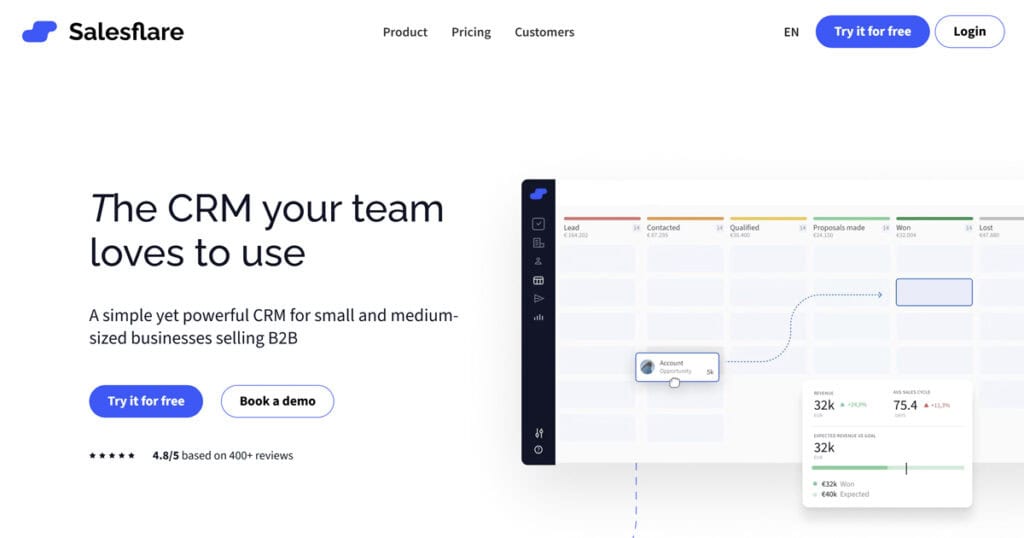
Salesflare is a smart HubSpot Sales Hub alternative for small and mid-sized B2B teams that want strong CRM automation without HubSpot’s platform complexity or contact-based pricing pressure.
Its biggest strength is simple: Salesflare does a lot of the CRM admin for you. It automatically gathers contact and company information from emails, email signatures, social profiles, and more. It also logs meetings and phone calls, tracks email opens, link clicks, and website visits, and organizes everything into clear customer timelines.
This makes it especially useful for lean sales teams that want to follow up better, manage pipelines more consistently, and keep customer data up to date without hiring a dedicated CRM admin. It’s not trying to replace HubSpot’s full marketing, service, and CMS ecosystem. Instead, it focuses on being a clean, automated B2B sales CRM that teams actually keep updated.
|
Feature |
Salesflare |
HubSpot Sales Hub |
|
Free plan |
❌ No |
✅ Yes, very limited |
|
Automated CRM data input |
✅ Yes |
⚠️ Limited without setup |
|
Email, link, and website tracking |
✅ Yes |
✅ Yes |
|
LinkedIn sidebar |
✅ Yes |
❌ No native equivalent |
|
Starting price |
$29/user/month |
$20/month |
What you’ll like:
-
-
- Automatic CRM data input reduces manual admin work
- Built-in email, link, and website tracking helps prioritize follow-ups
- Gmail, Outlook, and LinkedIn sidebars keep sales work close to where reps already sell
- Visual pipelines are easy to adopt for small B2B sales teams
- Personalized email campaigns are included on the entry plan
- Multi-email workflows, permissions, and custom dashboards are available on higher plans
- No hidden contact limits or surprise feature charges
-
What you might not like:
-
-
- No free plan
- Not an all-in-one marketing, sales, support, and CMS platform like HubSpot
- Less suited to large enterprise RevOps teams that need deep customization across many departments
-
Pricing:
-
-
- Growth: $29/user/month, billed annually
- Pro: $49/user/month, billed annually
- Enterprise: $99/user/month, billed annually (minimum of 5 users)
- 30-day free trial advertised — confirm current trial length directly at salesflare.com before publishing, as some sources indicate it may have been extended
-
Who should choose Salesflare?
Choose Salesflare if you’re a small or mid-sized B2B sales team that mainly needs a CRM for pipeline management, relationship tracking, email follow-up, and sales automation; without paying for HubSpot features your team won’t use.
4. Zoho
Best HubSpot alternative for customizability
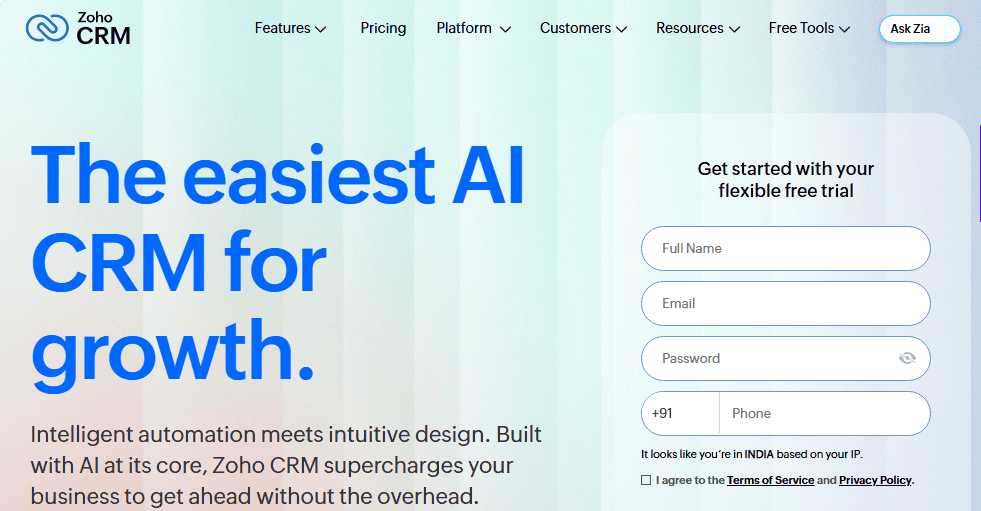
Zoho CRM is one of the most powerful and customizable CRM platforms available at any price point.
It’s a strong HubSpot alternative for businesses that want to tailor their CRM to specific workflows, use custom modules, and connect to a broad app ecosystem.
Zoho also offers a full suite of business software (Zoho Books, Zoho Desk, Zoho Campaigns) that integrates natively, making it a compelling all-in-one ecosystem for businesses willing to learn it.
| Feature | Zoho CRM | HubSpot |
|---|---|---|
| Free plan | ✅ Yes (3 users) | ✅ Yes |
| Custom modules | ✅ Available | ❌ Limited |
| AI assistant | ✅ Zia AI | ✅ ChatSpot |
| Starting paid price | $14/user/month | $20/month |
What you’ll like:
-
-
- Highly customizable fields, modules, and views
- AI-powered sales assistant (Zia) included in paid plans — Zia AI is now deeply integrated across the Enterprise and Ultimate plans, with predictive lead scoring, anomaly detection, and email sentiment analysis all included
- Deep integration with 40+ other Zoho apps
- Competitive pricing — Standard plan at $14/user/month vs comparable HubSpot tiers
-
What you might not like:
-
-
- The learning curve is steep; setup takes meaningful time
- Some users find the UI dated compared to HubSpot
- Support quality varies depending on your plan tier
-
Pricing:
-
-
- Free: Up to 3 users
- Standard: $14/user/month (billed annually)
- Professional: $23/user/month
- Enterprise: $40/user/month
- Ultimate: $52/user/month
-
Who should choose Zoho CRM?
Choose Zoho if your business needs deep customization and already uses — or plans to use — other Zoho products.
Read also: EngageBay vs HubSpot vs Zoho
5. Salesforce
Best enterprise-grade CRM
Salesforce is the world’s leading CRM platform — and it’s unmatched for enterprise-scale deployments.
If you have a large sales team, complex deal cycles, advanced reporting needs, and a dedicated admin or developer to configure the system, Salesforce is a defensible choice.
However, it’s one of the most expensive and complex options on this list, and it’s rarely the right fit for small businesses.
| Feature | Salesforce | HubSpot |
|---|---|---|
| Free plan | ❌ No | ✅ Yes |
| Starting price | $25/user/month | $20/month |
| Custom reporting | ✅ Extensive | ❌ Professional+ only |
| Learning curve | Very high | Moderate |
What you’ll like:
-
-
- Virtually unlimited customization and scalability
- Industry-leading reporting and analytics
- Enormous app marketplace (AppExchange)
- Trusted by large enterprise teams globally
-
What you might not like:
-
-
- Expensive, especially once you add needed features — implementation costs for SMBs typically start at $10,000–$50,000 and are separate from licensing fees
- Requires dedicated admin or developer for meaningful setup
- Not SMB-friendly without significant time and budget investment
-
Pricing:
-
-
- Starter Suite: $25/user/month, billed annually, per user, capped at 10 users maximum
Pro Suite: $100/user/month - Enterprise: $165/user/month — advanced customization, API access, deep reporting
- Unlimited: $330/user/month — includes Premier Support and all features
- Agentforce 1: $550/user/month — Salesforce’s newest AI-powered tier
- Starter Suite: $25/user/month, billed annually, per user, capped at 10 users maximum
-
Who should choose Salesforce?
Choose Salesforce if you’re a large enterprise with the budget and team to manage a complex CRM setup.
Which Is The Best Free Salesforce Alternative?
The best HubSpot alternatives for marketing
6. ActiveCampaign
Best HubSpot alternative for advanced marketing automation
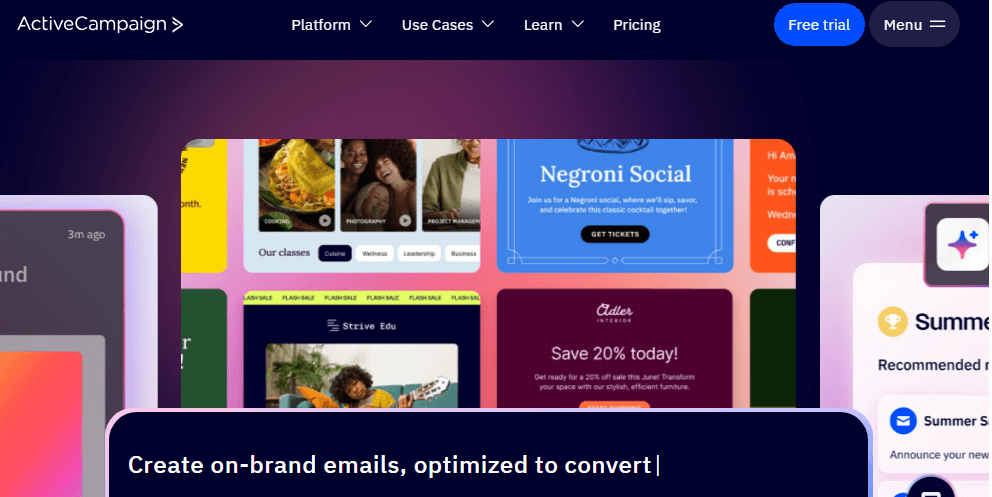
Our next pick for HubSpot alternatives is ActiveCampaign. A marketing automation service with small business CRM and email marketing,
ActiveCampaign is the gold standard for email marketing automation.
If sophisticated drip campaigns, behavioral triggers, and multi-step automations are your priority, it outperforms HubSpot’s Marketing Hub at a lower price — without the complexity of HubSpot’s contact-based pricing model.
It also includes a built-in CRM for sales pipeline management, making it more than just an email tool.
| Feature | ActiveCampaign | HubSpot Marketing Hub |
|---|---|---|
| Free plan | ❌ No | ✅ Yes (limited) |
| Automation depth | ⭐⭐⭐⭐⭐ | ⭐⭐⭐⭐ |
| A/B testing | ✅ All paid plans | ❌ Professional+ only |
| Starting price | $15/month | $800/month (for Pro automation) |
What you’ll like:
-
-
- Visual automation builder is one of the best in the industry
- A/B testing included in all paid plans — no paywall
- Built-in CRM with deal and pipeline management
- Strong deliverability and split testing tools
- Active Intelligence, ActiveCampaign’s AI engine, is now included across paid plans, adding predictive sending, generative email content, and AI-powered segmentation
-
What you might not like:
-
-
- No free plan (only a 14-day free trial)
- The CRM is more limited than dedicated CRM tools
- Can get expensive as contact lists grow (though cheaper than HubSpot)
-
Pricing (for 1,000 contacts, billed annually):
-
-
- Starter: $15/month
- Plus: $49/month
- Pro: $79/month (up to 3 users, predictive content, advanced reporting)
- Enterprise: $145/month (up to 5 users, premium CRM integrations, dedicated support)
-
**Prices scale with contact volume. At 10,000 contacts, Starter runs about $99/month and Plus about $239/month — all plans scale by contact count.
For comparison, ActiveCampaign’s $15/month starting price stands next to HubSpot’s roughly $800/month for Pro-tier automation.
Who should choose ActiveCampaign?
Choose ActiveCampaign if email automation is your primary use case and you need enterprise-grade drip campaigns without HubSpot’s enterprise pricing.
EngageBay vs ActiveCampaign vs Mailchimp: A comparison
7. GetResponse
Best HubSpot alternative for webinar marketing
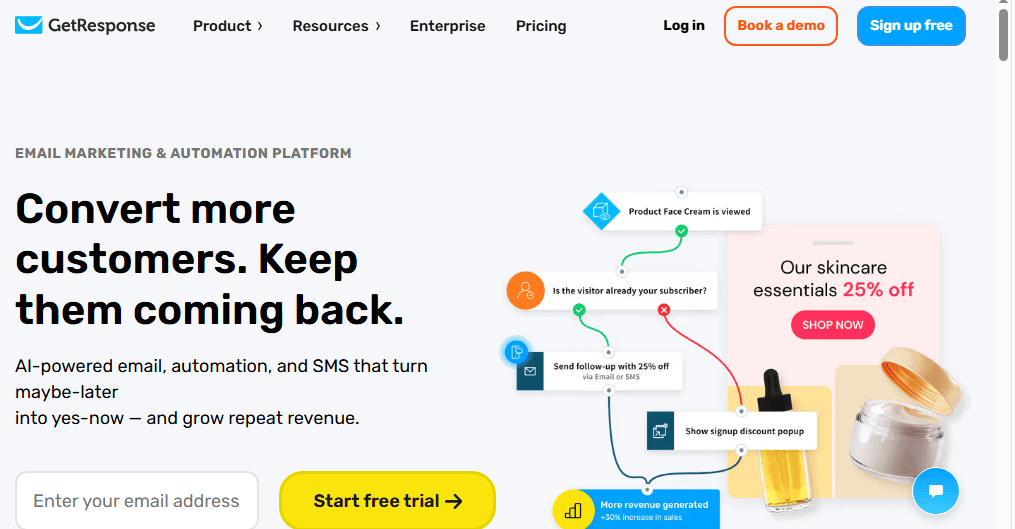
GetResponse combines email marketing, marketing automation, landing pages, and webinar hosting in one platform — making it a versatile alternative for businesses that rely on content marketing and online events as growth channels.
What you’ll like:
-
-
- Includes webinar hosting natively (a unique differentiator)
- Good landing page builder with A/B testing
- Generous free plan for up to 500 contacts
- Ecommerce integrations for product-based businesses
-
What you might not like:
-
-
- CRM functionality is limited
- UI can feel dated in some areas
- Not ideal as a primary CRM tool
-
Pricing:
-
-
- Free: $0, for 500 contacts, 2,500 emails/month
- Starter: $19/month, for 1,000 contacts — unlimited emails, 1 automation workflow
- Marketer: ~$59/month — visual automation, event tracking, contact scoring, advanced segmentation
- Creator: ~$69/month — webinars, online courses, landing pages, paid content
- Enterprise: Custom pricing — dedicated infrastructure, priority support
-
** Pricing scales with contact list size, and annual billing saves approximately 18%.
Who should choose GetResponse?
Choose GetResponse if email marketing, landing pages, and online events are your core growth channels.
Read also: The Best Free GetResponse Alternatives
8. Drip
Affordable email marketing software
Drip is purpose-built for eCommerce marketing. If you run a Shopify, WooCommerce, or similar store, Drip’s native integrations and revenue-attribution tracking make it one of the best tools for turning email subscribers into repeat customers.
What you’ll like:
-
-
- Built specifically for eCommerce use cases
- Deep Shopify and WooCommerce integration
- Revenue attribution tracking shows email ROI clearly
- Strong segmentation based on purchase behavior
- Unlike most platforms, Drip includes all features at every contact tier — there are no feature gates to navigate as you scale
-
What you might not like:
-
-
- No free plan — starts at $39/month
- Not suitable as a general-purpose CRM
- Overkill for businesses without an eCommerce component
-
Pricing:
-
-
- Up to 2,500 contacts: $39/month
- Up to 10,000 contacts: $154/month
- Up to 50,000 contacts: $699/month
- Over 180,000 contacts: Custom pricing
-
Who should choose Drip?
Choose Drip if you run an eCommerce store and want email marketing automation specifically built around purchase behavior.
Read also: 5 of the Best Drip Alternatives
9. Mailchimp
Best HubSpot alternative for email marketing and campaign management
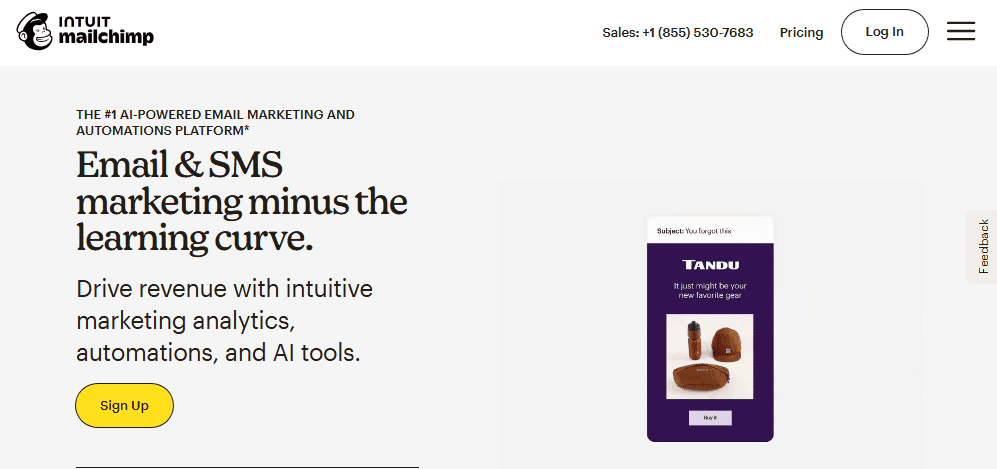
Mailchimp is one of the most recognized email marketing brands in the world — and it’s a reasonable starting point for businesses that need basic email marketing without a complex CRM. However, its pricing has increased significantly in recent years, and for growing businesses, it can become expensive quickly.
What you’ll like:
-
-
- Familiar, widely-used platform with extensive documentation
- Good template library and drag-and-drop editor
- Free plan available for small lists
- Strong integrations with eCommerce platforms (Shopify, WooCommerce)
-
What you might not like:
-
-
- Free plan has become more limited in recent years
- Automation features are basic compared to ActiveCampaign or EngageBay
- Pricing escalates quickly as contact list grows
- Not a CRM — you’ll need a separate tool for pipeline management
-
Pricing (starting prices; scales by contact count):
-
-
- Free: $0, 500 contacts, 1,000 emails/month
- Essentials: From $13/month, 500 contacts, 5,000 emails/month
- Standard: From $20/month, 500 contacts, 6,000 emails/month, adds automation
- Premium: From $299/month, 10,000 contacts, 150,000 emails/month, advanced features
-
Who should choose Mailchimp?
Choose Mailchimp if you primarily need email newsletters and are already deeply integrated with its ecosystem — otherwise, alternatives like EngageBay offer more for less.
10. Marketo Engage
Best HubSpot alternative for enterprises
Adobe Marketo Engage is one of the most powerful B2B marketing automation platforms available — and one of the most expensive. Originally built for enterprise lead management, account-based marketing (ABM), and multi-touch campaign orchestration, it now sits inside Adobe’s Experience Cloud as its flagship B2B automation product. If your organization has a large database, a dedicated marketing operations team, and a budget to match, Marketo delivers unmatched depth. For SMBs, it’s almost always overkill.
| Feature | Marketo Engage | HubSpot |
|---|---|---|
| Free plan | ❌ No | ✅ Yes |
| Free trial | ❌ No | ✅ Yes |
| Pricing transparency | ❌ Quote-based only | ✅ Public pricing |
| Best fit | Enterprise B2B | SMB to enterprise |
| Starting price | ~$1,295/month (estimated) | $20/month |
What you’ll like:
-
-
- Industry-leading B2B lead scoring, nurturing, and lifecycle management
- Deep Salesforce CRM integration with bidirectional sync and custom field mapping
- Advanced account-based marketing (ABM) capabilities built natively into the platform
- Robust revenue analytics and multi-touch attribution reporting
- AI-powered personalization across email, web, ads, and content experiences
-
What you might not like:
-
-
- No public pricing — all plans are quote-based and scale with database size, making it hard to budget without a sales call
- No free plan and no standard free trial
- Estimated starting cost of ~$1,295/month makes it inaccessible for most SMBs
- Very steep learning curve — most implementations require a dedicated MOps specialist or external consultant
- Implementation costs can range from $5,000 to $50,000+ depending on complexity
- Now bundled under Adobe Experience Cloud, which can add procurement complexity for buyers already managing separate Adobe contracts
-
Pricing:
-
-
- Plans: Select, Prime, Ultimate (all quote-based, no public pricing)
- Pricing scales with contact database size, not users
- Estimated starting range: ~$1,295/month for smaller databases
- Implementation fees: $5,000–$50,000+ depending on setup complexity
- Contact Adobe or an authorized partner for a customized quote
-
Who should choose Marketo Engage?
Choose Marketo Engage if you’re a mid-market or enterprise B2B company with 25,000+ contacts, a $1M+ marketing budget, and a dedicated marketing operations team — otherwise, the cost and complexity are difficult to justify.
Which HubSpot Alternative Should You Try? Read here!
The best sales CRM HubSpot alternatives
11. Freshsales
Best HubSpot alternative for AI-powered sales automation
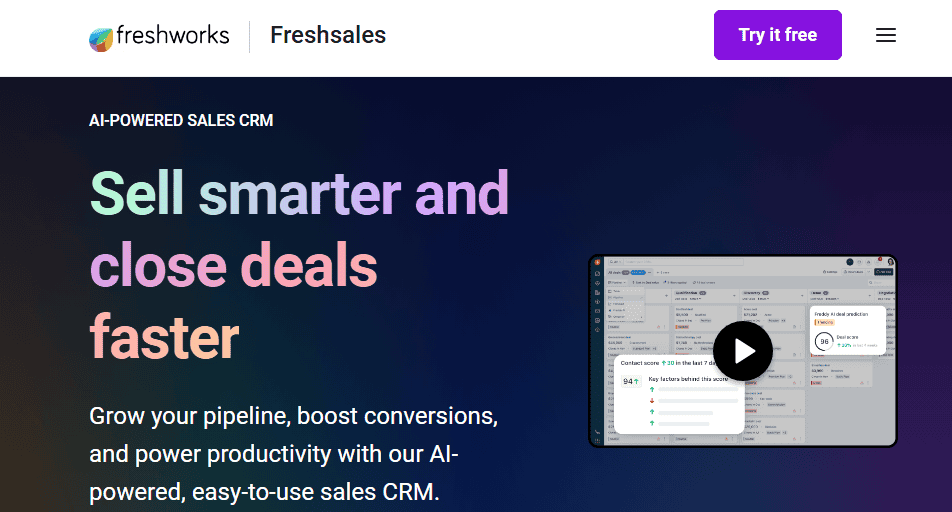
Freshsales (part of the Freshworks suite) is a well-designed CRM with a strong free plan, built-in phone and email, and an AI assistant called Freddy that helps prioritize deals and identify at-risk accounts.
It’s a particularly strong HubSpot Sales Hub alternative for SMB sales teams.
What you’ll like:
-
-
- Free plan for up to 3 users (limited features)
- Built-in phone, email, and chat
- Freddy AI includes lead scoring, deal insights, and contact summarization, helping prioritize leads and forecast deals — though the Copilot add-on costs $29/agent/month extra
- Native integration with Freshdesk for support teams
-
What you might not like:
-
-
- The free plan is capped at 3 users, not unlimited as some listings suggest — verify current limits before assuming otherwise
- Marketing automation is limited without upgrading to the full Freshworks suite
- Some integrations require higher-tier plans
-
Pricing (annual billing, per user/month):
-
-
- Free: $0, up to 3 users — limited features, no reports, no sequences
- Growth: $9/user/month (monthly billing: $11/user/month) — basic automation, contact management, sequences up to 10/user
- Pro: $39/user/month (monthly billing: $47/user/month) — Freddy AI lead scoring, multiple pipelines, Freshdesk integration
- Enterprise: $59/user/month (monthly billing: $71/user/month) — advanced permissions, audit logs, sandbox
-
**Monthly billing rates run approximately 20% higher than annual. A 21-day free trial is available on all paid plans.
Who should choose Freshsales?
Choose Freshsales if you want a polished, AI-assisted sales CRM with a free starting point and room to grow.
Read also: 15 Freshworks Alternatives for Great Customer Support
12. Pipedrive
Best HubSpot alternative for sales-focused CRM
Pipedrive is a sales CRM built entirely around the pipeline view — and it does that one thing extraordinarily well. It’s intuitive, fast to set up, and genuinely enjoyable to use for sales reps. If your primary pain point with HubSpot is complexity and you need a tool your sales team will actually adopt, Pipedrive is worth serious consideration.
Pipedrive rebranded its plan lineup in 2025 — if you’ve seen the old plan names (Essential, Advanced, Professional, Power, Enterprise) elsewhere, note that these have been replaced.
| Feature | Pipedrive | HubSpot Sales Hub |
|---|---|---|
| Free plan | ❌ No | ✅ Yes (limited) |
| Pipeline visualization | ⭐⭐⭐⭐⭐ | ⭐⭐⭐⭐ |
| Email marketing included | ❌ Add-on | ✅ Yes |
| Starting price | $14./user/month | $20/month |
What you’ll like:
-
-
- Best-in-class visual pipeline interface
- Easy for sales reps to adopt with minimal training
- Strong activity-based selling reminders and workflows
- AI-powered sales assistant on all plans
-
What you might not like:
-
-
- Limited marketing features — it’s primarily a sales CRM
- Automation is only available from the Growth plan ($39/user/month) up — the Lite plan does not include automations
- Reporting is solid but not as deep as HubSpot
-
Pricing:
-
-
- Lite: $14/user/month (formerly “Essential”)
- Growth: $39/user/month (formerly “Advanced”)
- Premium: $49/user/month (formerly “Professional” + “Power” combined)
- Ultimate: $79/user/month (formerly “Enterprise”)
-
**Monthly billing is higher across the board: Lite $24, Growth $49, Premium $79, Ultimate $99 per user/month.
Who should choose Pipedrive?
Choose Pipedrive if your primary need is a clean, sales-focused CRM that your team will actually use — without the overhead of HubSpot’s full platform.
Read also: The Best Free Pipedrive Alternative
13. Insightly
Best HubSpot alternative for project management
Insightly is a CRM that bridges the gap between sales pipeline management and project delivery. If your business closes deals that then become managed projects (agencies, consultancies, professional services), Insightly’s native project management features eliminate the need for a separate tool like Asana or Trello.
What you’ll like:
-
-
- Native project management built into the CRM
- Clean, modern interface
- Built-in relationship linking (contacts → deals → projects)
-
What you might not like:
-
-
- Marketing features require the separate Insightly Marketing add-on — a 10-person Professional CRM + Marketing bundle runs approximately $13,000+ annually with mandatory onboarding fees
- Workflow automation is only available on the Professional ($49/user/month) and Enterprise ($99/user/month) plans — the Plus plan lacks this feature, and AI Copilot is similarly gated
- Free plan availability is unclear: older reviews and directory listings describe a free two-user plan, but recent 2026 sources note this claim isn’t supported by Insightly’s current pricing page — verify directly at insightly.com before assuming a free tier is available
-
Pricing:
-
-
- Free: Historically $0 for 2 users — availability unconfirmed for 2026; check insightly.com
- Plus: $29/user/month (billed annually) — 100K records, 25 email templates
- Professional: $49/user/month — 250K records, 100 templates, workflow automation, AI Copilot (75 queries/month)
- Enterprise: $99/user/month — unlimited records, custom objects, Lambda functions
-
Who should choose Insightly?
Choose Insightly if your business sells services that become managed projects and you want CRM and project delivery in one place.
Insightly vs HubSpot: Pricing, Functionality, Features & More
14. SharpSpring (Now Constant Contact Lead Gen & CRM)
Best HubSpot alternative for agency-friendly automation
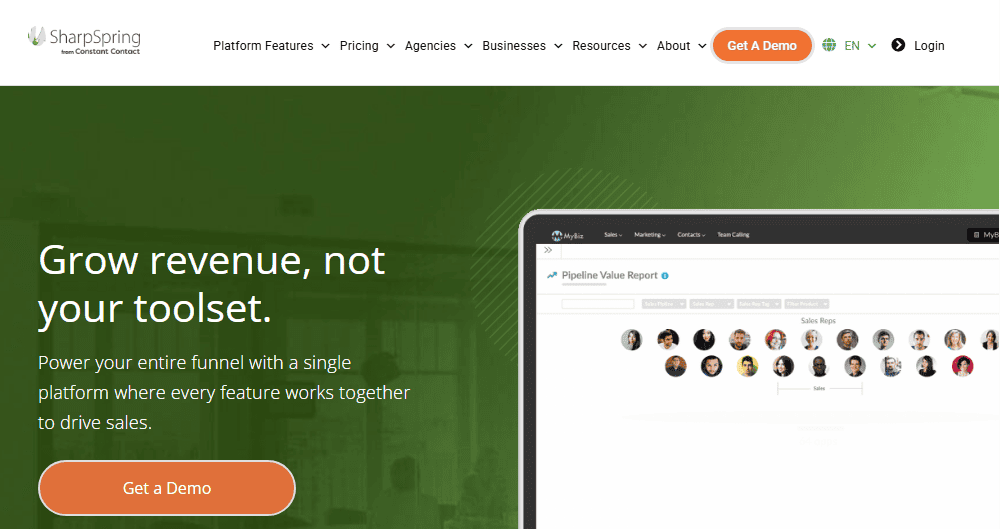
SharpSpring was acquired by Constant Contact in 2021 for $240M and rebranded as Constant Contact Lead Gen & CRM.
It remains an all-in-one marketing automation platform with CRM, email marketing, landing pages, and behavior-based tracking built in — and it’s particularly popular with marketing agencies that need white-label, multi-client management capabilities.
For businesses looking for a direct HubSpot alternative, it’s a viable option at the mid-market level, though its UX and onboarding fees require consideration.
| Feature | SharpSpring | HubSpot |
|---|---|---|
| Free plan | ❌ No | ✅ Yes |
| Unlimited users | ✅ Yes | ❌ (contact-based limits) |
| Agency white-label | ✅ Yes | ❌ Limited |
| Starting price | $449/month (1,000 contacts) | $20/month |
| Onboarding fee | $1,999 (all plans) | $3,000+ |
What you’ll like:
-
-
- All features included in every plan — no feature gating by tier (only contact volume changes)
- Unlimited users on all plans — ideal for agencies with large internal teams
- Strong behavior-based email automation and anonymous visitor tracking
- Native white-label capabilities for agencies managing client accounts
- Built-in CRM, landing page builder, and reporting in one platform
-
What you might not like:
-
-
- Mandatory $1,999 onboarding fee on every plan is a significant upfront cost: multiple 2025–2026 G2 reviews flag this fee as a barrier, so factor it into your first-year budget
- Pricing starts at $449/month — considerably higher than most SMB alternatives on this list
- UI is considered dated by many users compared to HubSpot or ActiveCampaign
- Email editor has received mixed reviews for reliability
- Month-to-month pricing exists but rates are not publicly listed
-
Pricing:
-
-
- 1,000 contacts: $449/month (billed annually)
- 10,000 contacts: $999/month
- 20,000 contacts: $1,449/month
- All plans include a mandatory $1,999 onboarding fee
- Annual contracts required for listed pricing; month-to-month rates are higher
-
Who should choose SharpSpring?
Choose SharpSpring if you’re a marketing agency that needs white-label multi-client automation management — for most non-agency businesses, the pricing and onboarding fees make it a harder sell compared to alternatives like EngageBay or ActiveCampaign.
Read also: 9 Affordable SharpSpring Alternatives For SMBs [With Pricing, Features]
15. Ontraport
Best HubSpot alternative for referral management
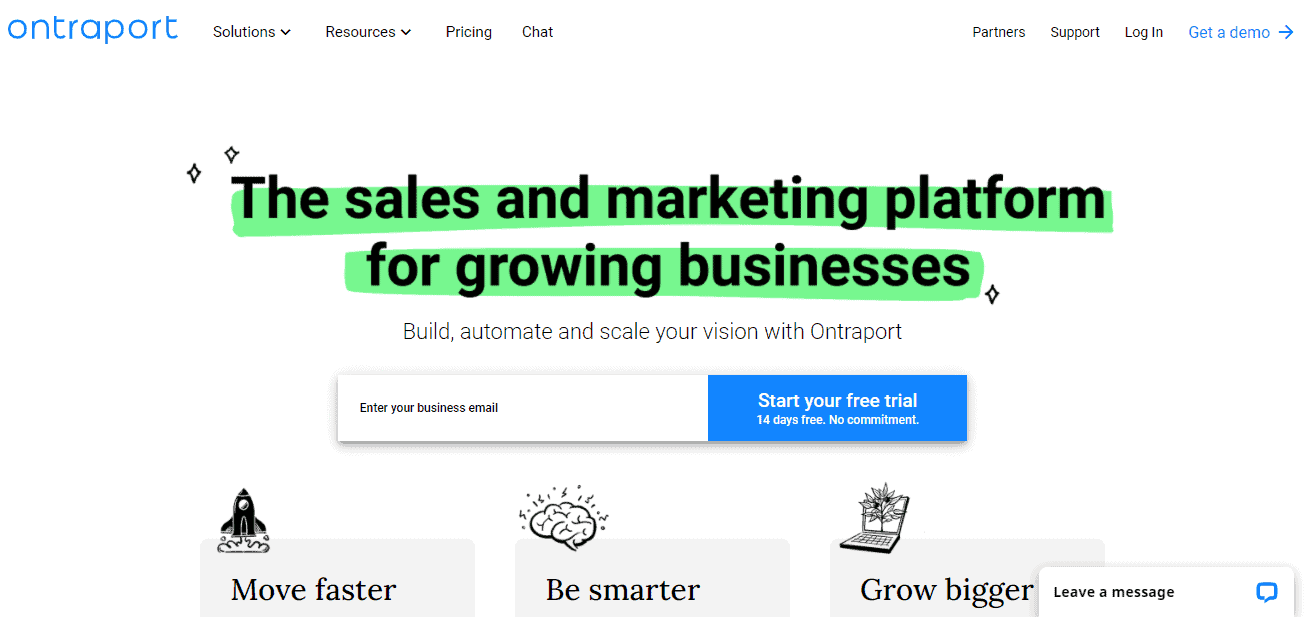
Next, we’ve got Ontraport.
Ontraport is an all-in-one business automation platform built specifically with small business owners, coaches, consultants, and service entrepreneurs in mind.
Founded by a small business owner, it combines CRM, email marketing, automation, landing pages, membership sites, and payment processing under one roof; making it one of the few tools that lets you manage the full client lifecycle, from first contact through invoicing, without needing separate tools.
It’s a strong HubSpot alternative for service-based SMBs that find HubSpot’s ecosystem too siloed.
| Feature | Ontraport | HubSpot |
|---|---|---|
| Free plan | ❌ No | ✅ Yes |
| Free trial | ✅ 14 days | ✅ Yes |
| Built-in payment processing | ✅ Yes | ❌ Requires integration |
| Membership sites | ✅ Yes | ❌ No |
| Starting price | $79/month | $20/month |
What you’ll like:
-
-
- Built-in payment collection and flexible checkout options — no third-party payment tool required
- Membership site creation included natively — ideal for course creators and coaches
- Visual campaign builder for designing end-to-end automation flows
- Customizable CRM with drag-and-drop pipeline management
- 14-day free trial with no credit card required
- Known for responsive customer support and active user community
-
What you might not like:
-
-
- No free plan — the trial ends and billing begins
- Reporting features can be slow, which can disrupt campaign analysis
- Limited third-party integrations compared to HubSpot’s ecosystem
- Learning curve is significant given the breadth of features
- Confusing pricing structure — the Enterprise tier is listed cheaper than Pro, which many users find unclear
-
Pricing:
-
-
- Basic: $79/month (1,000 contacts, 1 user)
- Plus: $147/month (2,500 contacts, 2 users — adds payments and membership sites)
- Pro: $297/month (10,000 contacts, 3 users — adds split automations and lead scoring)
- Enterprise: $497/month (20,000 contacts, 5 users — adds private IPs and enterprise security)
- Additional users: $9/user/month on all plans
-
Who should choose Ontraport?
Choose Ontraport if you’re a service-based entrepreneur, coach, or consultant who needs CRM, automation, and payment collection in one platform — without stitching together multiple tools.
Read also: The Best Free Ontraport Alternative
The best HubSpot alternatives for customer support
16. Zendesk
Best HubSpot alternative for omnichannel customer support
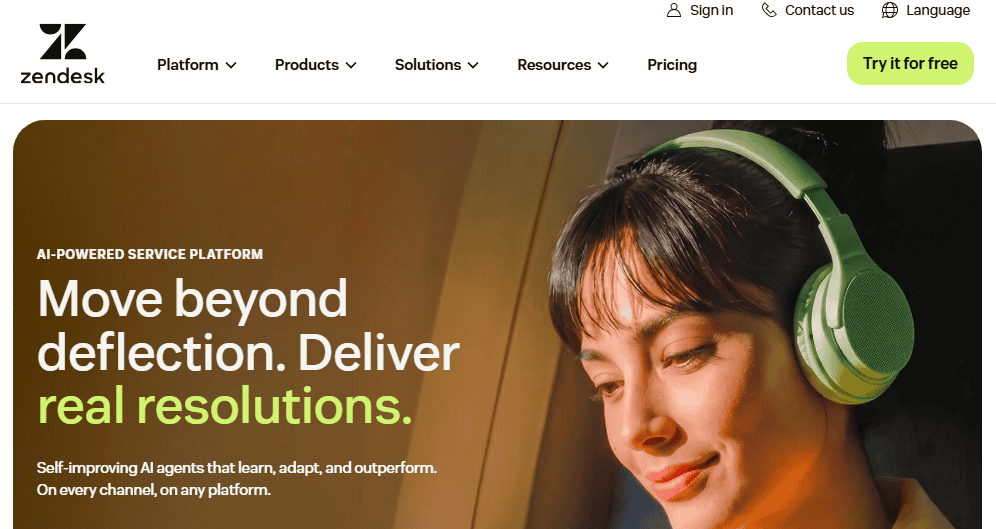
Zendesk is the leading customer support platform — if your primary need is a robust ticketing system, omnichannel support inbox, and customer service analytics, it’s hard to beat. It’s not a marketing CRM replacement for HubSpot, but for businesses leaving HubSpot’s Service Hub, it’s a natural destination.
Zendesk restructured its customer service lineup in 2026: the former Suite Growth tier no longer exists.
What you’ll like:
-
-
- Industry-leading support ticketing and omnichannel inbox
- Extensive automation for ticket routing and escalation
- Strong analytics and SLA tracking
- Large marketplace of integrations
- AI Agents are included on Suite plans, automating resolutions beyond the base ticketing workflow
-
What you might not like:
-
-
- Not a marketing tool — you’d still need a separate CRM for sales/marketing
- Can be expensive for small teams
- Steeper learning curve for complex setups
- Zendesk now bills separately for AI features. The Copilot AI add-on costs $50/agent/month on top of your base plan, and AI Agents are billed per automated resolution above the included allowance (roughly $1.20–$1.50 per resolution) — budget carefully, since a team on Suite Professional with AI features active can exceed $165/agent/month
-
Pricing (per agent/month, billed annually):
-
-
- Support Team: $19/agent/month — email and basic ticketing only, no live chat, voice, or knowledge base
- Suite Team: $55/agent/month — messaging, live chat, voice, knowledge base, AI Agents included
- Suite Professional: $115/agent/month — adds skills-based routing, IVR, advanced reporting, SLAs
- Suite Enterprise + Copilot: Contact sales (previously listed near $169/agent/month; now sold only via sales inquiry)
-
Who should choose Zendesk?
Choose Zendesk if customer support is your primary need and you want a best-in-class ticketing platform.
Which Is The Best Free Zendesk Alternative?
17. Help Scout
Best HubSpot alternative for growing teams
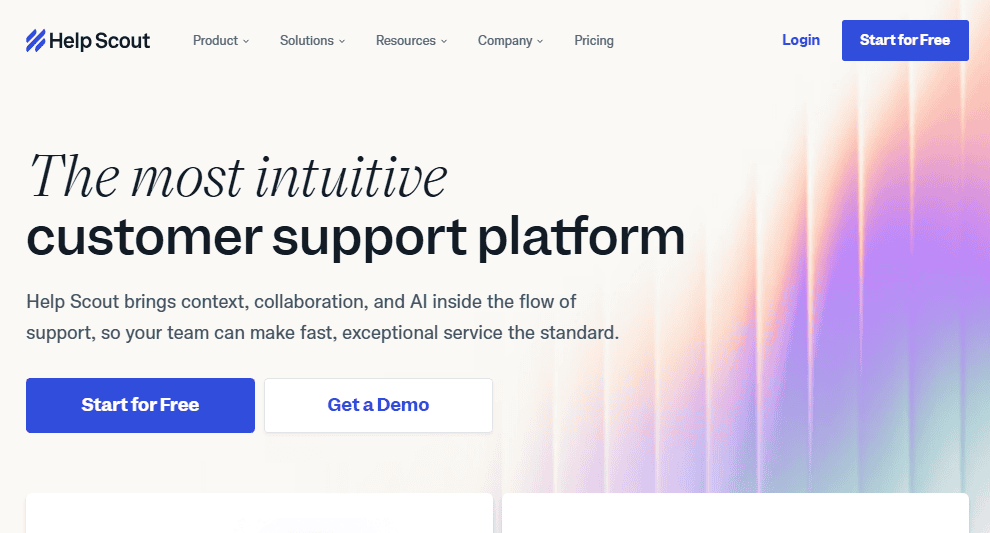
Help Scout is a customer support platform built around the philosophy that support should feel personal — not like navigating a ticket queue.
Instead of traditional ticketing interfaces, Help Scout presents conversations as email threads, making it intuitive for both support agents and customers.
It combines a shared inbox, knowledge base, and live chat (via its Beacon widget) into a clean, approachable platform that’s particularly popular with SMBs, startups, and mission-driven companies.
It’s a natural alternative for teams leaving HubSpot’s Service Hub who want simplicity without sacrificing capability.
| Feature | Help Scout | HubSpot Service Hub |
|---|---|---|
| Free plan | ✅ Yes (5 users, limited) | ✅ Yes (limited) |
| Free trial | ✅ 15 days (no credit card) | ✅ Yes |
| Shared inbox | ✅ All plans | ✅ All plans |
| Knowledge base | ✅ All plans | ✅ Paid plans |
| Starting paid price | $25/user/month | $20/user/month |
What you’ll like:
-
-
- Conversations feel like normal email — no learning curve for agents or customers
- Clean, well-designed interface that teams adopt quickly
- Shared inbox, knowledge base, and live chat included in every paid plan
- 15-day free trial with no credit card required
- Integrates with 50+ tools including Shopify, Salesforce, Jira, Slack, and Zapier
- Trusted by well-known SMBs and startups like Buffer and Vimeo
-
What you might not like:
-
-
- The Free plan caps customer contacts at 100/month — a meaningful limit for real-world use
- Reporting is limited on lower tiers — custom dashboards require the Pro plan
- AI Answers feature is billed separately at $0.75 per resolution (after a 3-month free trial)
- Per-seat pricing adds up quickly for larger teams
- Not a CRM — you’ll still need a separate tool for marketing and pipeline management
-
Pricing (annual billing, per user/month):
-
-
- Free: $0, up to 5 users, 1 inbox, 1 Docs site, 100 customer contacts/month cap
- Standard: $25/user/month (monthly: $30/user/month) — up to 20 inboxes, shared inbox, Docs, live chat
- Plus: $45/user/month (monthly: $54/user/month) — adds WhatsApp, advanced workflows, round-robin routing, Salesforce/Jira integration
- Pro: $75/user/month (monthly: $90/user/month) — unlimited inboxes and users, SSO, SAML, HIPAA, dedicated onboarding
- AI Answers: $0.75 per resolution (billed separately; 3-month free trial included)
-
**Annual billing saves 16% on seat costs versus monthly rates.
Who should choose Help Scout?
Choose Help Scout if your primary need is a simple, human-feeling support inbox that your team will actually enjoy using — and you don’t need it to double as a CRM or marketing tool.
18. Freshdesk
Best HubSpot alternative with scalable customer support
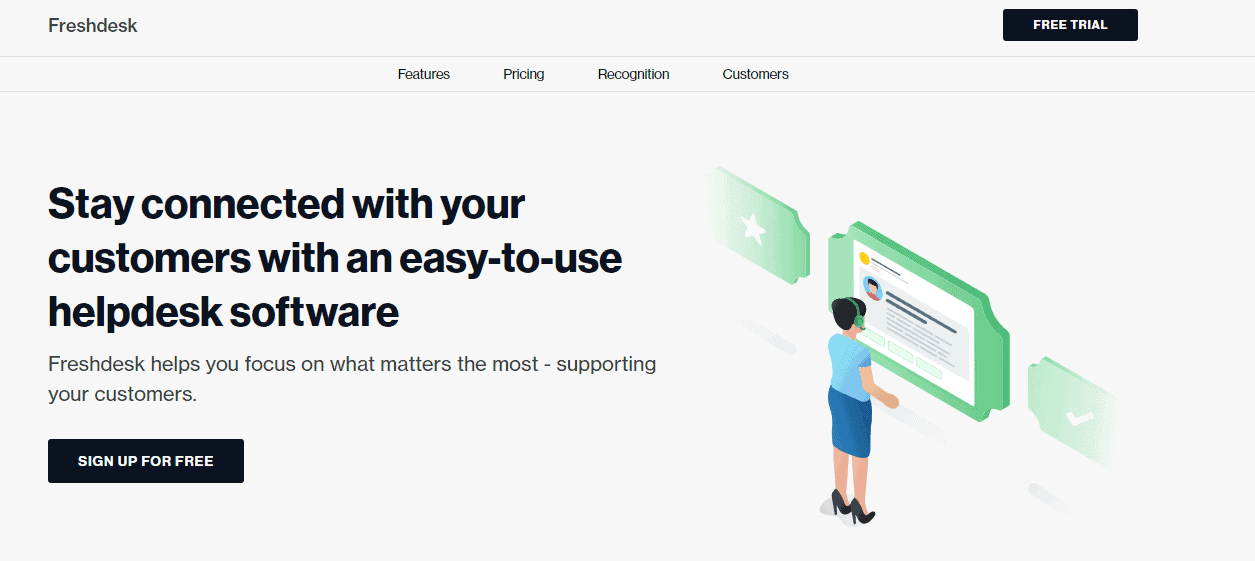
Freshdesk is one of the most widely used customer support platforms in the world, built by Freshworks.
It’s known for strong ticketing automation and multi-channel support spanning email, phone, chat, social media, and messaging apps.
For businesses leaving HubSpot’s Service Hub, Freshdesk offers a more specialized, scalable alternative — particularly for teams where support volume and channel complexity are growing faster than budget.
Important 2026 update: Freshdesk no longer offers a permanent free plan. The free tier is now a 6-month starter program limited to 1–2 agents — a significant change from the “unlimited-time, 10-agent” free plan the platform was previously known for.
| Feature | Freshdesk | HubSpot Service Hub |
|---|---|---|
| Free plan | ✅ Limited (1–2 agents, 6-month starter only) | ✅ Yes (limited) |
| Free trial | ✅ Yes (all paid plans) | ✅ Yes |
| Multi-channel support | ✅ Email, chat, phone, social | ✅ Email, chat, phone |
| SLA management | ✅ Growth+ | ✅ Professional+ |
| Starting paid price | $19/agent/month | $20/user/month |
What you’ll like:
-
-
- Strong multi-channel ticketing across email, chat, phone, social media, and messaging apps
- Automation features for ticket routing, escalation, and SLA management
- Scales well from small teams to enterprise — used by thousands of businesses globally
- Annual billing saves 15–20% compared to monthly rates
- Free trial available on all paid plans
-
What you might not like:
-
-
- The free program is now capped at 1–2 agents for 6 months only — not a permanent free plan
- The jump from Growth ($19/agent/month) to Pro ($55/agent/month) is steep — a 227% increase — and many essential features like round-robin routing and custom roles require Pro
- Phone support, chatbot features, and omnichannel capabilities cost extra beyond the base plan price
- Freddy AI features are not included in base plans. Freddy AI Copilot costs an additional $29/agent/month and is only available on Pro and Enterprise plans; AI Agent sessions beyond the included 500 cost $49 per 100 sessions
- Deactivating users does not automatically stop billing — requires a manual support request
-
Pricing:
-
-
- Free Program: $0, limited to 1–2 agents for up to 6 months — basic ticketing and knowledge base, not a permanent tier
- Growth: $19/agent/month (billed annually) — adds SLA management, automation, and integrations
- Pro: $55/agent/month — adds custom dashboards, custom roles, round-robin routing, and SLA analytics
- Enterprise: $89/agent/month — adds audit logs, IP whitelisting, and advanced security
- Omnichannel and AI features are priced separately and add to the total cost
-
Who should choose Freshdesk?
Choose Freshdesk if you need a scalable, multi-channel helpdesk and can work within (or around) the 6-month starter program — it remains one of the best-value support platforms for growing teams that are outpacing HubSpot’s Service Hub pricing.
Read Also: Top Freshdesk Alternatives For Superior Support
Our Selection Criteria for the Best HubSpot Alternatives
We take our recommendations seriously. Here’s exactly how we evaluated the 18 tools in this guide.
How we chose these 18 tools: We evaluated over 30 CRM and marketing platforms before narrowing to these 18. Tools were eliminated if they lacked transparent public pricing, had significant reliability issues reported across multiple review platforms, or were not meaningfully competitive with HubSpot’s core use cases.
Time spent reviewing: Each tool was reviewed over a period of 2–4 weeks, using trial accounts where available, testing core features against documented claims, and cross-referencing with recent G2 and Capterra user reviews from 2025–2026. Pricing was re-verified in August 2026.
Criteria used:
-
-
- Pricing transparency — Is the pricing clearly published and free of hidden fees?
- Free plan availability — Does the tool offer a genuinely usable free tier, not just a “freemium” that’s barely functional?
- Ease of migration from HubSpot — How straightforward is it to import HubSpot contacts, deals, and data?
- All-in-one functionality — Does the tool reduce the need for multiple separate subscriptions?
- SMB-specific features — Is the product designed with small business workflows in mind, or is it enterprise software with SMB marketing bolted on?
- Customer support quality — What level of support is included at each pricing tier?
-
Marketing Madness: HubSpot vs EngageBay Face-Off!
How to Switch from HubSpot: A Simple Checklist
Making the move from HubSpot doesn’t have to be complicated. Here’s a step-by-step process that works for most platforms — including EngageBay:
-
-
- Export your HubSpot data — Download your contacts, deals, companies, and notes as CSV files from HubSpot’s settings panel. Go to Settings → Data Management → Import & Export.
- Map your data fields — Before importing into your new platform, note which HubSpot fields (e.g., “Lifecycle Stage,” “Deal Stage”) correspond to fields in your new tool. Create a simple spreadsheet mapping old fields to new ones.
- Import contacts and deals — Most alternatives including EngageBay accept direct HubSpot CSV imports. Use the guided import wizard in your new platform and map fields during the upload process.
- Recreate your key automations — List your top 3–5 active workflows in HubSpot and rebuild these first in the new platform before going live. Don’t try to migrate everything at once.
- Run both platforms in parallel for 2–4 weeks — Keep HubSpot active while your team gets comfortable with the new tool. Deactivate HubSpot only once the migration is confirmed clean.
- Update your forms and integrations — Replace any HubSpot-embedded forms or tracking scripts on your website with those from your new platform. Check all landing pages, pop-ups, and website forms.
- Request your new platform’s migration support team — Before you begin exporting, reach out to your new provider’s migration or onboarding team so you have a managed plan in place from day one. EngageBay provides a completely free, dedicated migration service for businesses switching from HubSpot — contact the EngageBay team before exporting to get a guided migration plan.
-
EngageBay offers free 1:1 onboarding for all paid users and has a dedicated migration support team specifically for businesses moving from HubSpot. Our team has helped hundreds of SMBs make the switch — usually in under two weeks.
Which HubSpot Alternative Should You Try?
While the HubSpot CRM software is a leader in the marketing and CRM automation niche, it is not suitable for small businesses and startups.
You may think that the platform is quite affordable when you’ve just started, as the Starter Customer Platform only costs $15 a month for 1,000 contacts. But what happens when your company grows, and you need to store more contacts and have better features? That’s where the pricing becomes unaffordable.
The cost of HubSpot’s Starter Customer Platform jumps up to $758 a month for 25,000 contacts 😅
If your business has boomed and you need advanced features, you must choose the Enterprise plan. The pricing? HubSpot costs a whopping $3,600 a month for 10,000 contacts in the Marketing Enterprise plan. Add to this the mandatory onboarding fee of $7,000, and your annual billing exceeds $50K!
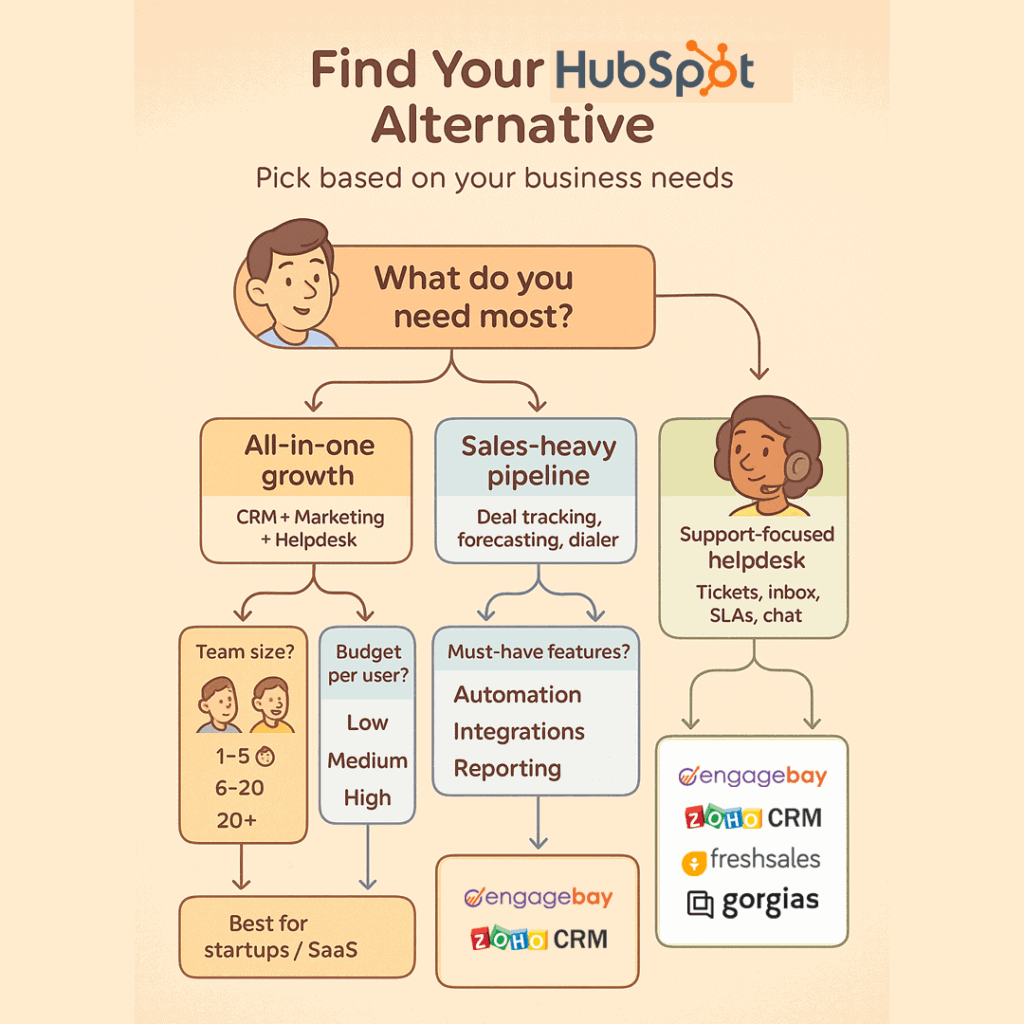
That’s why small businesses need more affordable HubSpot alternatives, and we have done the homework for you. You might wonder, ‘What can I use instead of HubSpot?’. It depends on your business size and requirements. For enterprises, we recommend choosing Salesforce or Adobe Marketo.
For businesses needing complete customer experience automation with a lot of integrations, it’s better to go for ActiveCampaign. Small businesses that need an affordable all-in-one marketing, sales, and support solution can try EngageBay.
EngageBay is built from the ground up with affordability and ease of use in mind.
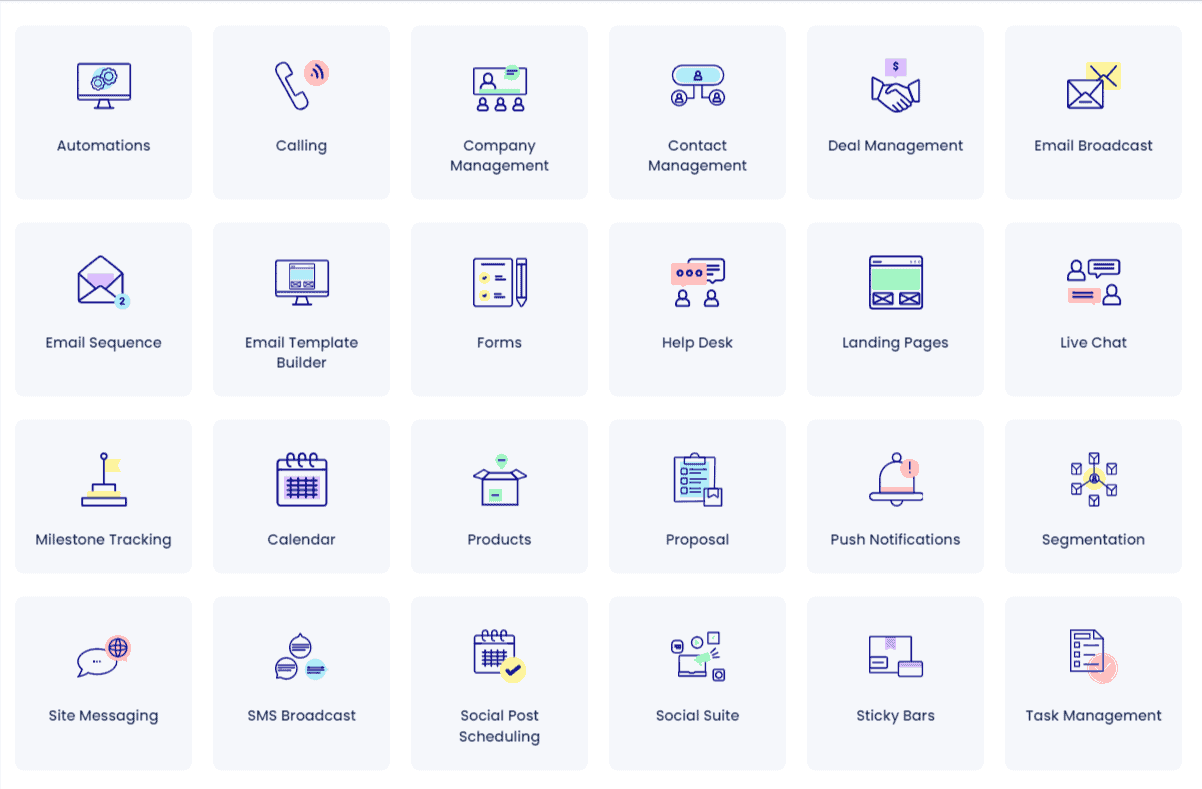
You get a forever free version, the Basic plan starts at $13.79/month, and the Pro plan with a plethora of advanced tools — and unlimited contacts — costs $110.39/month! Try it today 🙂
For small businesses, EngageBay stands out. Its forever-free CRM supports 15 users, 500 contacts, branded emails, basic automations, and help-desk features—capabilities that HubSpot keeps behind paywalls. When you outgrow free limits, EngageBay’s paid tiers remain a fraction of HubSpot’s cost.
Five platforms consistently surface in 2026 cost-benefit comparisons: EngageBay, Zoho CRM, Freshsales, GetResponse, and ActiveCampaign. All bundle pipelines, marketing automation, and support tools for under $60 per month, avoiding HubSpot’s multi-hub stack that can climb into hundreds—or thousands—once contact volumes and feature needs increase.
HubSpot’s free tier is intentionally limited: no workflow automation, custom reports, or white-label branding. As soon as contact lists exceed 1,000 or you need basic triggers, upgrades are mandatory—often alongside onboarding fees. The resulting jump to Starter or Professional plans surprises many new users.
Starter offers only simple email sends and list segmentation. Robust workflows, branching logic, and advanced reporting live in Professional, which starts around $3,600 a year plus onboarding. Pricing is contact-based, so scaling from 1 k to 25 k contacts can push monthly bills well past the $750 mark.
HubSpot remains a strong, integrated suite for enterprises that can justify five-figure annual budgets. Smaller, sub-$10 M ARR firms often cite steep renewals, frequent upsells, and limited Starter functionality as deal-breakers. Tools like EngageBay deliver similar feature depth at an 80 %-plus savings, offering friendlier growth paths.
