
If you’re researching HubSpot vs Mailchimp vs EngageBay in 2026, you’re not just picking an email tool anymore — you’re choosing a complete CRM + marketing automation ecosystem that will shape how your business captures leads, nurtures customers, and scales revenue.
The landscape has shifted.
-
-
-
HubSpot has doubled down on AI-powered CRM, predictive analytics, and enterprise scalability.
-
Mailchimp has evolved beyond email into a broader marketing platform with AI content tools and deeper eCommerce features.
-
EngageBay continues positioning itself as the affordable, all-in-one CRM alternative built specifically for startups and SMBs.
-
-
So the real question in 2026 isn’t “Which email software is best?”
It’s:
-
-
-
Which platform gives you AI-enabled growth without runaway costs?
-
Which tool scales with your team — not just your contact list?
-
And which one delivers the best ROI per dollar spent?
-
-
In this updated comparison, we’ll break down:
-
-
-
Core CRM capabilities
-
AI & automation maturity (2026 updates)
-
Email marketing depth
-
Integrations & omnichannel tools
-
Real pricing impact as you scale
-
-
Then we’ll help you choose the right platform based on your actual business stage — not marketing hype.
Table of Contents
Before we proceed, here’s a quick feature/plan comparison table that will give you a clearer glimpse of the details discussed below.
Quick Comparison: HubSpot vs Mailchimp vs EngageBay (2026 Snapshot)
| Feature | HubSpot | Mailchimp | EngageBay |
|---|---|---|---|
| Free CRM | ✅ Yes (robust but tier-limited features) | ⚠️ Basic audience management (not full CRM) | ✅ Yes (full CRM for SMBs) |
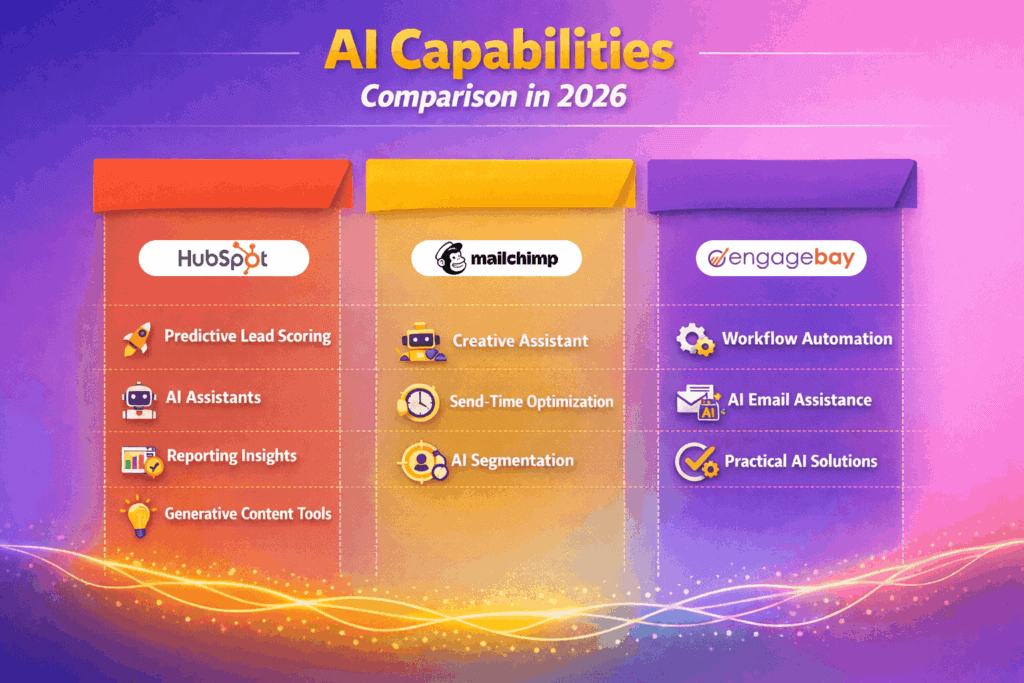
| AI Capabilities (2026) | 🚀 Predictive lead scoring, AI assistants, reporting insights, generative content tools | 🤖 Creative Assistant, send-time optimization, AI segmentation | ⚙️ Workflow automation, practical AI email assistance |
| Email Templates | ✅ Drag-and-drop builder + business templates | ✅ Templates + AI Creative Assistant | ✅ Drag-and-drop builder + templates |
| Landing Pages & Forms | ✅ Advanced builder + smart forms | ✅ Landing pages + popups + forms | ✅ Landing pages + web forms |
| Marketing Automation | 🔥 Advanced multi-step workflows (Marketing Hub tiers) | ✅ Behavioral email automation | ✅ Visual workflows + sequences |
| CRM & Contact Segmentation | 🧠 Advanced CRM + lifecycle stages + predictive scoring | ⚠️ Basic contact segmentation | ✅ Full contact management + segmentation |
| Live Chat / Site Messaging | ✅ Live chat + chatbot tools | ❌ Limited native tools | ✅ Live chat + SMS + push notifications |
| Integrations | 🌐 Extensive App Marketplace (1,000+ apps) | 🌐 300+ integrations | 🌐 Growing ecosystem + omnichannel tools |
| Best For (2026) | Scaling teams & enterprise growth | Email-first marketers & eCommerce brands | Budget-conscious SMBs wanting all-in-one |
What’s Changed in 2026 (And Why It Matters)
This comparison matters more now because:
-
-
-
AI is no longer optional. HubSpot leads in predictive intelligence. Mailchimp focuses on AI-driven email creation. EngageBay prioritizes practical automation for small teams.
-
Pricing scales differently now. HubSpot pricing grows quickly with seats and contacts. Mailchimp pricing scales heavily with list size. EngageBay remains more predictable for SMBs.
-
Omnichannel marketing is expected. Email-only tools are losing ground to platforms that combine CRM, automation, SMS, chat, and analytics.
-
-
– If you’re running a lean team, you need simplicity and cost control.
– If you’re scaling aggressively, you need automation depth and predictive data.
And if you’re somewhere in between — your decision matters even more.
What Is HubSpot?
HubSpot is an AI-powered CRM platform built around inbound marketing, sales automation, and customer service management.
In 2026, it’s no longer just “marketing software” — it’s a full customer platform designed to manage the entire lifecycle from first visit to repeat revenue.
HubSpot’s ecosystem includes:
-
-
-
Marketing Hub – Advanced marketing automation, AI-powered campaign tools, lead nurturing workflows
-
Sales Hub – CRM, pipeline management, deal tracking, AI lead scoring
-
Service Hub – Helpdesk, ticketing, customer feedback tools
-
CMS Hub – Website and content management
-
Operations Hub – Data sync and automation across systems
-
-
Is HubSpot CRM Free?
Yes — HubSpot still offers a free CRM, but advanced automation, predictive analytics, and AI-powered tools require paid tiers.
In 2026, pricing scales based on users and marketing contacts, which makes it powerful — but potentially expensive as you grow.
What’s Inside HubSpot Marketing Hub (2026)?
The Marketing Hub now includes:
-
-
-
AI-powered content generation and campaign assistance
-
Predictive lead scoring and revenue attribution
-
Advanced automation workflows
-
Conversion and traffic analytics dashboards
-
Blog and content creation tools
-
Social media ads and campaign management
-
Email marketing with personalization tokens
-
Live chat and chatbot tools
-
Video hosting and tracking
-
Smart forms and landing page builders
-
Advanced segmentation and lifecycle tracking
-
-
Best for: Scaling teams, B2B companies, and enterprises needing advanced reporting, AI insights, and multi-department alignment.
What Is Mailchimp?
Mailchimp, now part of Intuit, has evolved from an email marketing tool into a broader marketing automation platform focused on SMBs and eCommerce brands.
While it still leads with email marketing, Mailchimp now offers:
-
-
-
Audience management and behavioral segmentation
-
Signup forms and landing pages
-
AI-powered Creative Assistant for email design
-
Subject line optimization and send-time optimization
-
Email templates and dynamic content blocks
-
Customer journey automation
-
Basic CRM-style contact management
-
Campaign analytics and reporting
-
-
In 2026, Mailchimp remains strongest for email-first marketing strategies, especially for small businesses and online stores that want intuitive campaign creation without enterprise-level complexity.
Best for: eCommerce brands, content creators, and SMBs focused primarily on email campaigns and marketing automation.
Uncover the landscape of HubSpot competitors with our comprehensive guide.
HubSpot vs Mailchimp: A Comparative Analysis
What Is EngageBay?
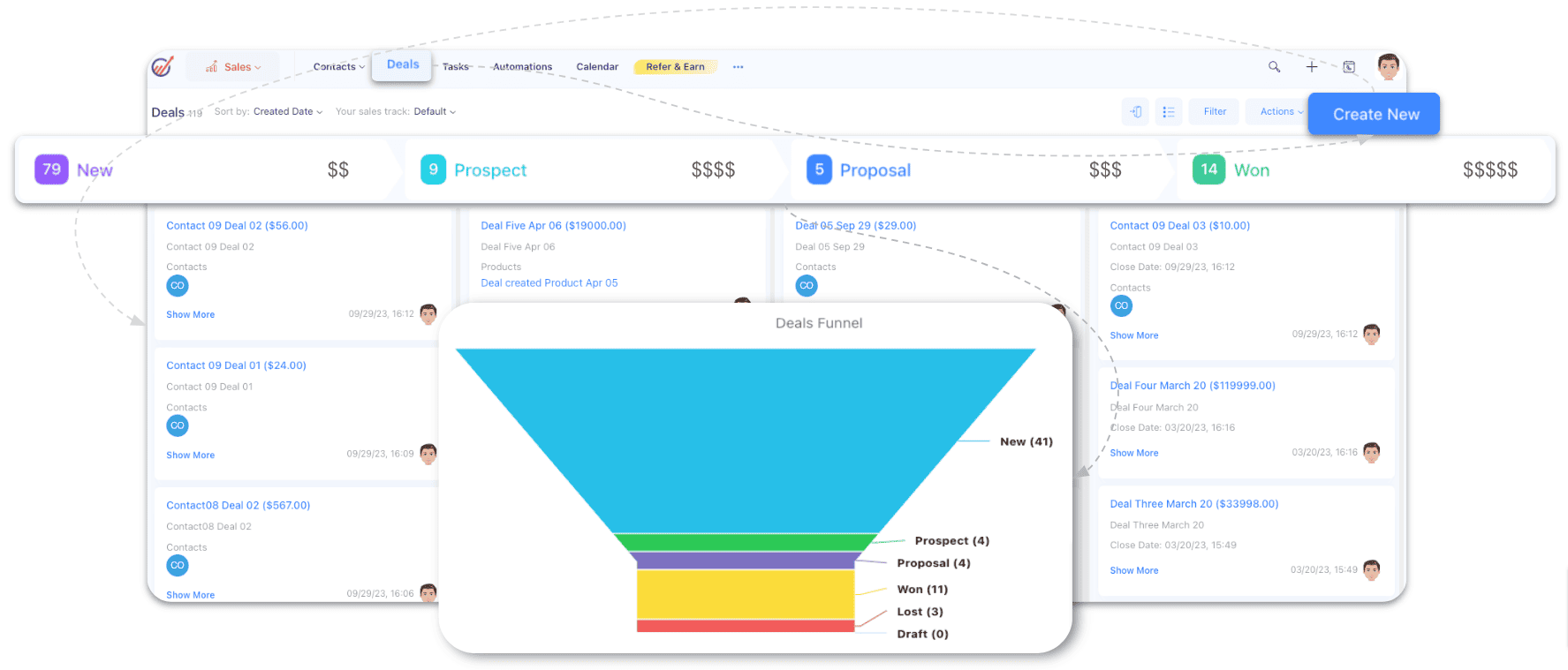
EngageBay was built as an affordable alternative to HubSpot — offering CRM, marketing automation, sales tools, and customer support in one unified platform.
Unlike Mailchimp (which is email-first), EngageBay positions itself as a true all-in-one CRM + marketing automation solution for startups and small businesses.
Its product ecosystem includes:
-
-
-
Marketing Bay – Email marketing, automation, landing pages
-
CRM & Sales Bay – Deal tracking, lead scoring, contact management
-
Service Bay – Helpdesk, ticketing, support automation
-
All-in-One Suite – Combined access to all modules
-
-
What’s Inside EngageBay’s Marketing Bay (2026)?
-
-
-
Email marketing with drag-and-drop builder
-
Email sequences and automation workflows
-
Contact segmentation and tagging
-
Web forms and landing pages
-
Inbound marketing tools
-
CRM-integrated campaign tracking
-
-
EngageBay continues to differentiate itself in 2026 with:
-
-
-
Predictable pricing for growing teams
-
Built-in CRM without expensive add-ons
-
Multi-channel marketing (email + SMS + push + chat)
-
Automation built for lean SMB teams
-
-
Best for: Budget-conscious startups and small businesses that want CRM + marketing + support tools without enterprise-level pricing.
EngageBay Tutorial For Beginners | How To Use EngageBay
HubSpot vs Mailchimp vs EngageBay (2026): Features, Pricing & AI Comparison
When comparing HubSpot vs Mailchimp vs EngageBay in 2026, you’re no longer choosing just an email marketing tool.
You’re choosing between:
-
-
-
An AI-powered enterprise CRM platform (HubSpot)
-
An email-first marketing automation platform (Mailchimp)
-
An affordable all-in-one CRM + marketing suite (EngageBay)
-
-
Let’s break this down by features, automation depth, AI capabilities, CRM strength, integrations, and pricing scalability — the factors that matter most in 2026.
2026 Features Matrix: HubSpot vs Mailchimp vs EngageBay:
| Feature / Platform | HubSpot | Mailchimp | EngageBay |
|---|---|---|---|
| Free CRM | ✅ Strong | 🎯 Basic | ✅ Full |
| Email Automation | AI-enhanced | Workflow builder | Good |
| Landing Pages | Advanced | Yes | Yes |
| AI Tools | Predictive + Analytics | Creative Assistant | Basic AI |
| Scalability | Enterprise-ready | SMB-leaning | SMB-leaning |
| Integrations | 🚀 Extensive | Extensive | Growing |
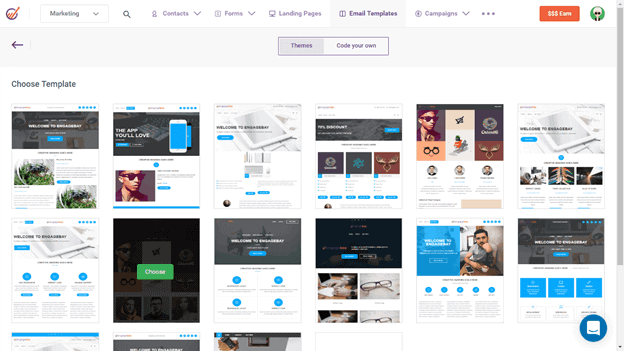
Email Templates & AI Content Tools (2026)
HubSpot
HubSpot’s email builder is tightly integrated with its CRM and automation engine.
In 2026, it includes:
-
-
-
Drag-and-drop email builder
-
Smart content personalization
-
AI-powered subject line and email copy assistance
-
Performance analytics (open, click, revenue attribution)
-
Sales email templates usable in Gmail & Outlook
-
Team template sharing
-
-
HubSpot’s strength isn’t just templates — it’s AI-driven personalization + lifecycle-based automation.
Templates dynamically adjust based on CRM data and behavioral triggers.
Best for: Sales-aligned marketing teams that want revenue attribution tied directly to CRM data.
Mailchimp
Mailchimp remains strong in design flexibility and ease of use:
-
-
-
100+ pre-built email templates
-
Drag-and-drop editor
-
Custom-coded templates
-
Dynamic content blocks
-
AI Creative Assistant (design & brand alignment)
-
Send Time Optimization
-
-
Mailchimp’s AI focuses on creative optimization and campaign timing, rather than predictive sales intelligence.
Best for: eCommerce brands and marketers prioritizing fast campaign launches and polished designs.
EngageBay
EngageBay combines templates with CRM-connected automation:
-
-
-
Drag-and-drop email builder
-
HTML custom templates
-
Email sequences & broadcasts
-
Behavioral tagging
-
AI-assisted email suggestions (practical, workflow-focused)
-
Deep CRM personalization
-
-
EngageBay stands out by tying email campaigns directly into sales pipelines without enterprise pricing.
Best for: SMBs that want CRM-integrated email marketing without paying premium AI costs.
Landing page and form builders
HubSpot
-
-
-
Advanced drag-and-drop landing page builder
-
Smart forms with progressive profiling
-
AI content suggestions
-
A/B testing
-
Mobile optimization
-
Conversion analytics
-
-
HubSpot leads in conversion intelligence and optimization tracking, especially at Professional and Enterprise tiers.
Mailchimp
Mailchimp now offers:
-
-
-
Landing page builder
-
Pop-up forms
-
Signup forms
-
Audience capture tools
-
-
While not as advanced as HubSpot’s smart content engine, it works well for straightforward lead capture.
EngageBay
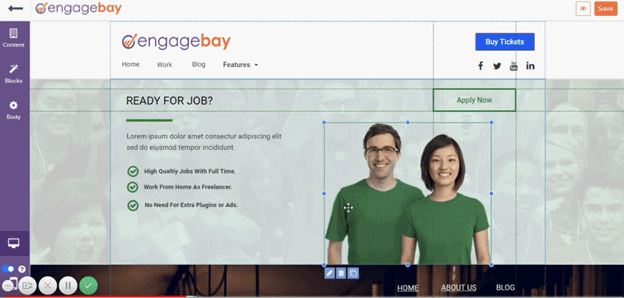
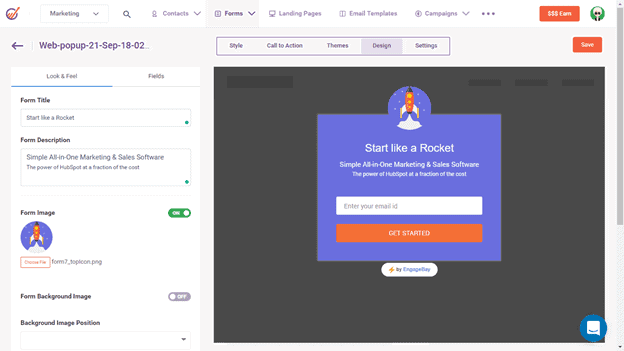
EngageBay offers:
-
-
-
Drag-and-drop landing page builder
-
Web forms + pop-ups
-
Custom domains
-
A/B testing (Growth plan+)
-
Site messaging triggers
-
-
Its edge: combining landing pages + CRM + SMS + push notifications in one workflow.
Marketing Automation & AI Workflows
Automation is where 2026 buyers pay close attention.
HubSpot (Enterprise-Level AI Automation)
HubSpot includes:
-
-
-
Multi-step visual workflows
-
Predictive lead scoring (Enterprise tier)
-
AI-powered deal insights
-
Email sequences & personalization
-
Behavioral event triggers
-
Revenue attribution
-
Chatbots & programmable bots
-
Webhooks & custom automation
-
-
HubSpot’s automation is deeply connected to AI analytics and sales performance tracking.
Best for: Scaling B2B teams and data-driven marketing organizations.
Mailchimp (Email-Centric Automation)
Mailchimp automation includes:
-
-
-
Customer journey builder
-
Behavior-based triggers
-
Send Time Optimization
-
Dynamic content
-
Advanced segmentation (Standard+)
-
Multivariate testing (Premium)
-
-
Mailchimp excels in campaign automation, but lacks deep predictive CRM intelligence.
Best for: Email-focused businesses with moderate automation needs.
EngageBay (All-in-One Workflow Automation)
EngageBay automation includes:
-
-
-
Email personalization
-
Sales automation
-
Task automation
-
Missed call reassignment
-
Trigger-based workflows
-
Automated segmentation
-
SMS & push automation
-
-
Its strength is combining marketing + sales + support automation in one place at SMB pricing.
Best for: Lean teams wanting practical automation without enterprise complexity.
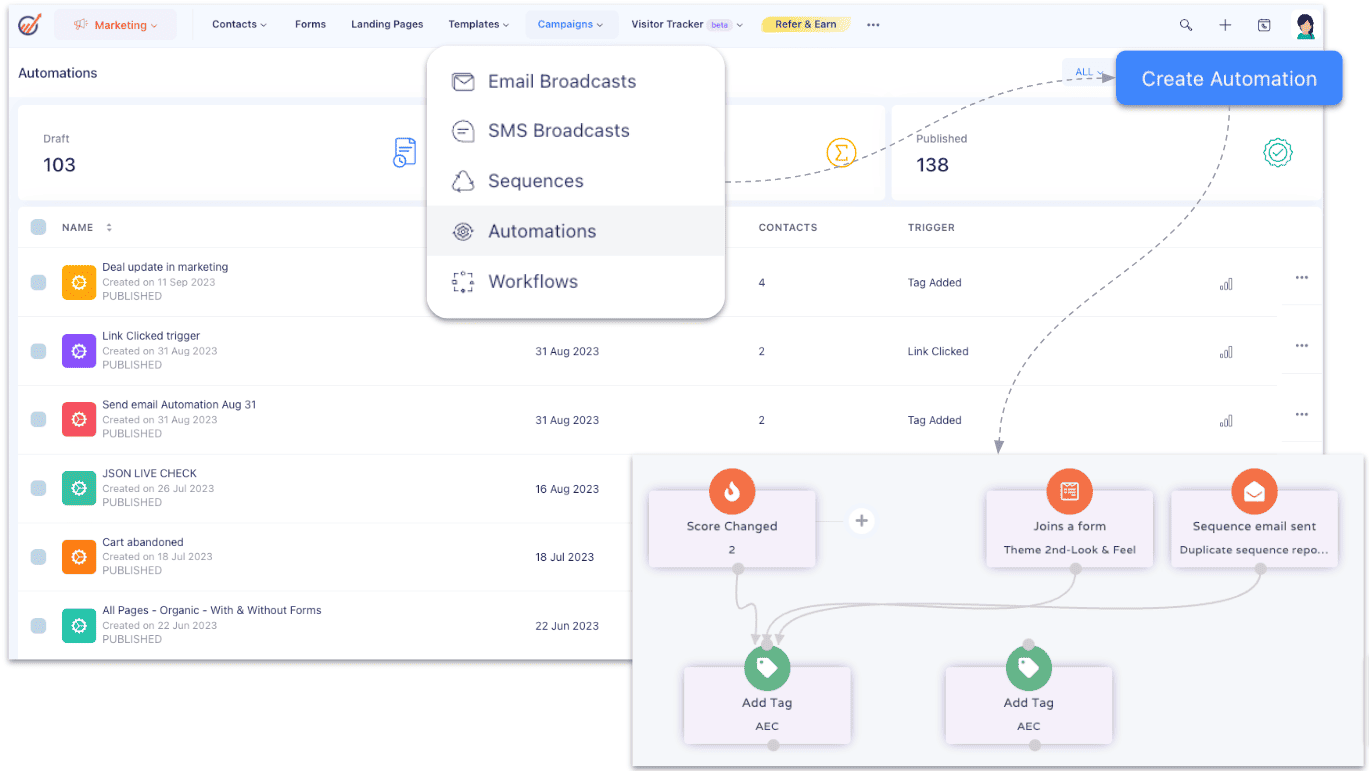
Here is a guide on how you use EngageBay’s automation workflows.
CRM Capabilities (Free vs Scalable)
HubSpot CRM (Free but Tier-Gated AI)
HubSpot CRM includes:
-
-
-
Pipeline management
-
Contact & deal tracking
-
Meeting scheduling
-
Live chat
-
Reporting dashboard
-
AI-driven scoring (Enterprise)
-
Revenue attribution
-
-
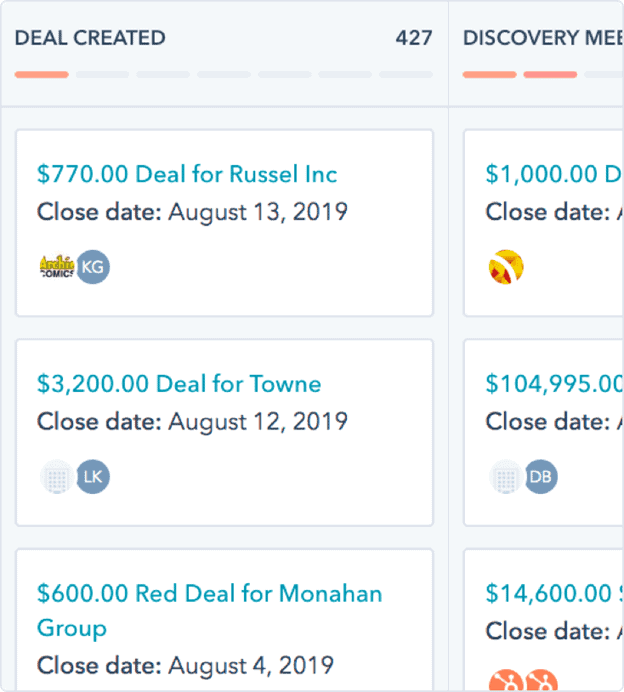
However, advanced features require paid seats and contact upgrades.
Mailchimp CRM (Marketing-Focused)
Mailchimp’s CRM is more of an audience management system:
-
-
-
Behavioral targeting
-
Contact profiles
-
Revenue & growth reports
-
Segmentation
-
Mobile access
-
-
It’s strong for marketing insights — weaker for complex sales pipeline management.
EngageBay CRM (Free & Fully Integrated)
EngageBay CRM includes:
It offers broader CRM functionality at lower cost than HubSpot’s paid tiers.
EngageBay CRM Review: 12 Things You Need To Know
Integrations & Ecosystem
HubSpot
1,000+ integrations across:
-
-
-
Google Workspace
-
Microsoft
-
Shopify
-
Salesforce
-
Stripe
-
Zoom
-
Slack
-
WordPress
-
-
HubSpot has the largest ecosystem and enterprise-level flexibility.
Mailchimp
300+ integrations including:
-
-
-
WooCommerce
-
Canva
-
Stripe
-
Shopify
-
Google Analytics
-
Facebook & Instagram
-
-
Strong for eCommerce and marketing tech stacks.
EngageBay
Rapidly growing integration library:
-
-
-
Zapier
-
Shopify
-
Stripe
-
Twilio
-
QuickBooks
-
Xero
-
RingCentral
-
Amazon SES
-
SendGrid
-
-
Focused on SMB practical needs and telephony integrations.
Read also: HubSpot vs GetResponse: A Comprehensive Review and Analysis
2026 Pricing Comparison (Scalability Matters)
Now that you have a much clearer idea of which services are included among HubSpot, Mailchimp, and EngageBay, as well as how these three software platforms differ, it’s time to discuss the pricing for each.
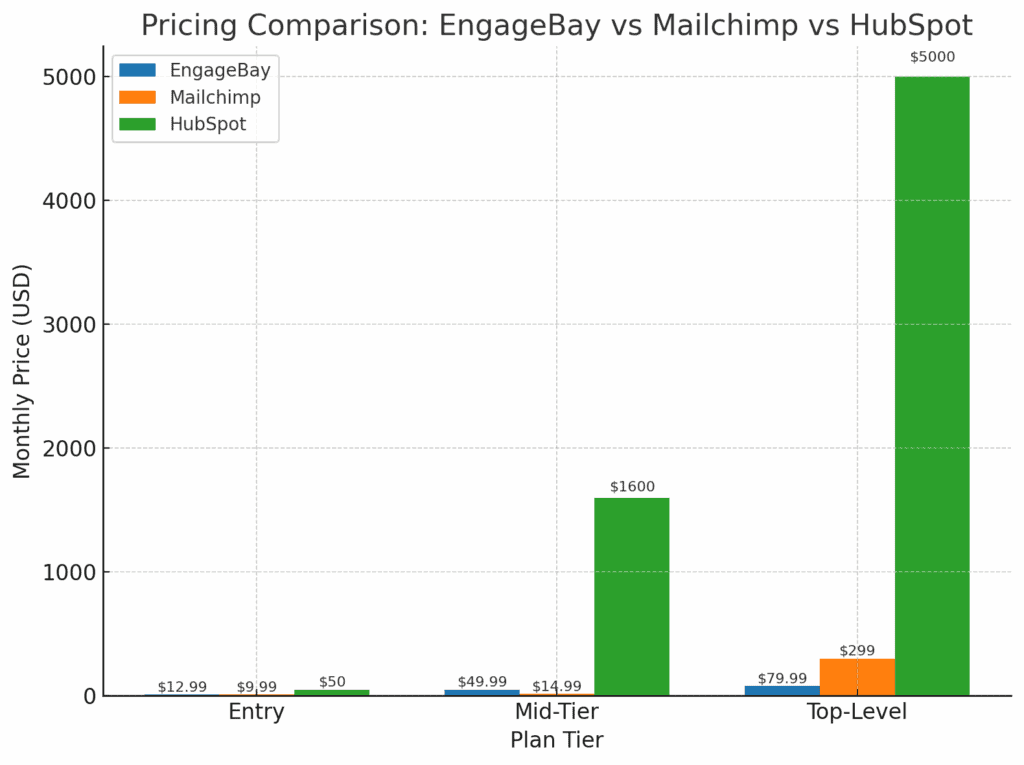
In 2026, pricing is one of the biggest decision drivers when comparing HubSpot, Mailchimp, and EngageBay — not just sticker prices, but how costs scale as your business grows, adds users, and increases contacts.
We’ll walk through each platform’s pricing tiers, what’s included, how scalability impacts cost, and the best-fit business scenarios for each.
HubSpot Pricing (CRM + Marketing + Sales + Service)
HubSpot now uses a seat-based + marketing contact pricing model across its core Hubs. That means:
-
-
-
You pay based on users (seats) who need edit access
-
AND based on the number of marketing contacts you engage
-
Higher tiers unlock advanced AI, automation, and reporting
-
-
1. HubSpot CRM Suite — Free
Best for: Startups, early stage businesses, basic CRM needs
-
-
-
Unlimited users (view-only seats free)
-
Contact & deal management
-
Live chat & basic bots
-
Email tracking & notifications
-
Basic task automation
-
-
What’s missing: Predictive lead scoring, AI insights, advanced automation
2. Starter Plans
HubSpot Starter (Sales + Marketing + Service): ~$20–$50/mo (depending on billing)
Includes:
-
-
-
Marketing contact lists (limited tier)
-
Email marketing
-
Shared inbox & live chat features
-
List segmentation
-
Basic ads management
-
Calling & meeting scheduling
-
-
Cost driver: As contacts increase, pricing rises quickly — e.g., 5,000 contacts can push monthly costs significantly above the base.
Good for: SMBs that want all-in-one CRM basics with light automation.
3. Professional Plans
HubSpot Professional: ~$800–$1,800+/mo depending on contacts
Includes everything in Starter, plus:
-
-
-
Multi-step automation workflows
-
Custom reporting dashboards
-
AI-assisted content & scoring tools
-
Predictive lead scoring
-
Landing pages & A/B testing
-
Video hosting & analytics
-
-
Cost notes:
-
-
-
Pricing increases with contacts
-
Seats may cost extra for marketing or service users
-
-
Best for: Mid-size businesses that want deeper automation, content tools, and reporting.
4. Enterprise Plans
HubSpot Enterprise: ~$3,600–$5,000+/mo + onboarding fees
Includes:
-
-
-
Advanced predictive AI analytics
-
Behavioral event triggers
-
Programmable chatbots
-
Field-level permissions & hierarchies
-
Revenue attribution tools
-
-
Cost impact:
-
-
-
Often includes mandatory onboarding fees
-
Pricing quickly scales as contacts/users increase
-
-
Best for: Large businesses and scaling organizations that rely on AI insights and revenue-centric automation.

HubSpot 2024 pricing update: In March 2024, HubSpot introduced a major update to its pricing structure by moving to a seats-based approach.
Two new seats were added, namely View-Only and Core. The View-Only seats are unlimited and free and offer only view access.
On the other hand, the paid Core seats offer edit access for all the data and features of that particular subscription.
The catch is that the paid Core seat functionality was part of the previous free plan.
Check out our article on the top HubSpot alternatives to help you make the right choice.
Mailchimp pricing (Email-First & Marketing Stack)
Mailchimp pricing in 2026 still scales primarily with your contact count and send limits, rather than seat licenses.
1. Free Plan
Cost: $0
-
-
-
Up to 500 contacts
-
1,000 sends/month (max 500/day)
-
Basic email templates
-
Basic reporting
-
Limited automations (welcome + abandoned cart)
-
Trial access to landing pages/forms
-
-
Good for: Beginners, small lists, early testing.
2. Essentials Plan
Cost: ~$13/mo (starting tier; increases with contacts)
Includes:
-
-
-
Up to 3 audiences
-
Drag-and-drop email templates
-
Basic automation flows (up to ~4 steps)
-
A/B testing
-
10× monthly send limit
-
-
Notes: Still limited in advanced segmentation and analytics.
Good for: Small businesses that want better automation than Free plan.
3. Standard Plan
Cost: ~$20/mo (scales with contacts)
Includes everything in Essentials, plus:
-
-
-
Advanced automation flows
-
Advanced segmentation & prebuilt segments
-
Dynamic content
-
Send Time Optimization
-
Multivariate testing
-
Comparative reporting
-
-
Good for: Active email marketers and eCommerce sellers who want automation + analytics without enterprise pricing.
4. Premium Plan
Cost: ~$350+/mo (for 10,000 contacts; scales with list size)
Includes:
-
-
-
Unlimited audiences & seats
-
Priority support
-
Multivariate testing at scale
-
Predictive segmentation insights
-
SMS with MMS options (where available)
-
Personalized onboarding (higher plans)
-
-
Good for: Large email lists with complex segmentation and optimization needs.
Not happy with Mailchimp’s pricing? See our top picks for the best Mailchimp alternatives.
EngageBay pricing (All-in-One CRM + Marketing)
EngageBay pricing in 2026 is per user, predictable, and generous with features — especially compared with platforms that charge separately for seats and contacts.
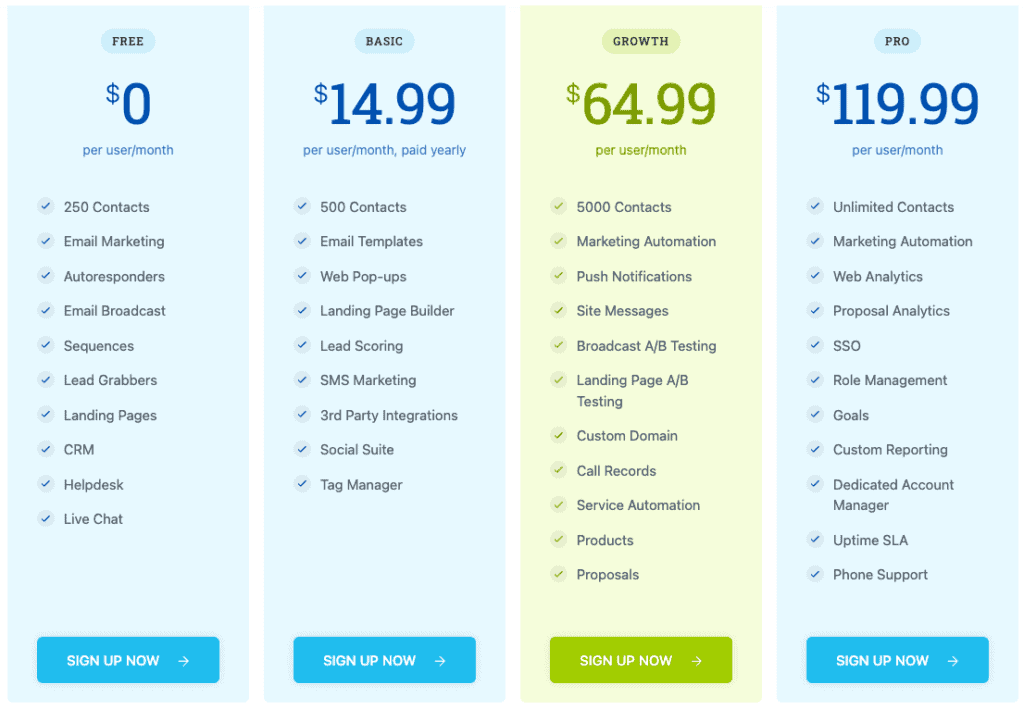
The other three plans are the Basic for $14.99 a month per user, the Growth plan for $49.99 a month per user, and the Pro plan for $119.99 a month per user.
1. Free Plan
Cost: $0 — forever
Includes:
-
-
-
CRM contact management
-
Email templates & broadcasts
-
Landing pages & sequences
-
Web forms
-
Basic automation
-
-
Best for: Early-stage businesses that want full CRM + marketing stack basics.
2. Basic Plan
Cost: ~$14.99/user/mo
Adds:
-
-
-
Tag & custom field management
-
SMS marketing support
-
Landing page builder
-
All native integrations
-
-
Good for: Small teams starting outbound automation.
3. Growth Plan
Cost: ~$49.99/user/mo
Includes everything in Basic, plus:
-
-
-
Marketing automation
-
A/B testing for emails & landing pages
-
Custom domain support
-
Site messaging triggers
-
More advanced analytics
-
-
Good for: SMBs that want scalable automation without complexity.
4. Pro Plan
Cost: ~$119.99/user/mo
Adds:
-
-
-
Unlimited contacts
-
Phone support + account manager
-
SSO & SLA uptime guarantee
-
Custom reports & analytics
-
CRM Telephony integrations
-
-
Great for: Growing teams that want CRM + marketing + sales automation in one platform without enterprise costs.
2026 Pricing Comparison — Key Takeaways
| Platform | Cost Driver | Best Fit | Scaling Challenge |
|---|---|---|---|
| HubSpot | Seats + marketing contacts | Enterprise / scaling teams | Pricing can grow rapidly |
| Mailchimp | Contact count & send limits | Email-centric marketers | Costs balloon with big lists |
| EngageBay | Per user, predictable | SMBs and startups | Fewer enterprise-grade AI tools |
HubSpot vs Mailchimp vs EngageBay: The Winner in 2026
Choosing between HubSpot vs Mailchimp vs EngageBay in 2026 comes down to one core question: which platform delivers the best balance of CRM power, marketing automation, AI capabilities, and scalable pricing for your stage of growth?
If you are a startup or small business, your budget is limited.
That means every dollar invested in CRM and marketing software must drive measurable ROI.
The wrong decision can lock you into rising contact-based fees, seat-based pricing, or feature limitations that force a migration later.
Let’s break this down clearly.
When HubSpot Wins
HubSpot is the strongest option for businesses that need:
-
-
-
Advanced AI-powered CRM and predictive lead scoring
-
Revenue attribution and lifecycle analytics
-
Enterprise-grade automation workflows
-
Deep integrations and cross-department alignment
-
-
In 2026, HubSpot leads in AI-driven insights and enterprise scalability.
However, its seat-based and contact-based pricing model can become expensive as your team grows and your marketing list expands.
Best fit: Growth-stage companies and enterprises that prioritize advanced automation, reporting, and AI insights over cost sensitivity.
When Mailchimp Wins
Mailchimp remains a strong contender for businesses focused primarily on email marketing and campaign optimization.
It offers:
-
-
-
A wide range of email templates
-
AI Creative Assistant for design and branding
-
Send Time Optimization
-
Customer journey automation
-
Strong eCommerce integrations
-
-
Mailchimp’s pricing appears affordable at first, but costs increase as your contact list grows.
Since pricing is heavily contact-based, scaling to larger audiences can significantly raise monthly expenses.
Best fit: Email-first marketers and eCommerce brands that prioritize campaign execution over advanced CRM functionality.
When EngageBay Wins
EngageBay stands out for startups and SMBs that need:
-
-
-
A full CRM included in every plan
-
Marketing automation workflows
-
Email, SMS, and site messaging
-
Predictable per-user pricing
-
All-in-one sales, marketing, and service tools
-
-
In 2026, EngageBay’s advantage is value for money.
It delivers CRM, automation, and multi-channel marketing without the steep scaling costs seen in some enterprise platforms.
While it may not offer the same level of predictive AI depth as HubSpot, it provides practical automation and CRM capabilities that meet the needs of most small and mid-sized teams.
Best fit: Budget-conscious startups and growing businesses that want a unified CRM and marketing platform without enterprise-level pricing.
Final Verdict: Which Platform Should You Choose?
-
-
-
Choose HubSpot if you need enterprise-grade AI, advanced analytics, and deep automation and your budget supports long-term scaling costs.
-
Choose Mailchimp if email marketing is your primary focus and you want intuitive campaign tools with strong design flexibility.
-
Choose EngageBay if you want an affordable all-in-one CRM and marketing automation solution built specifically for startups and small businesses.
-
-
The winner ultimately depends on your growth stage, team size, contact volume, and budget tolerance.
If your priority is cost-efficient scalability with strong CRM and automation capabilities, EngageBay offers the most balanced value proposition in 2026.
If your priority is advanced AI-driven marketing and revenue analytics at scale, HubSpot leads.
If your priority is powerful email marketing with flexible design and automation tools, Mailchimp remains a solid choice.
The right platform is the one that supports your next three years of growth — not just your next three months.
Learn more in our related comparison: HubSpot Vs EngageBay
Learn more about EngageBay:
Sign up with EngageBay for free
Related reading:
- The best CRM Tools for Small Businesses
- The 14 Best CRM Automation Software in 2024
- 15 Best Marketing Automation Tools for Small Businesses
- Is HubSpot Worth It? In-Depth Review for Small Businesses
For startups comparing HubSpot vs Mailchimp vs EngageBay, EngageBay wins with affordable fixed-price tiers, full feature access, no sliding-scale billing, and month-to-month plans—making it the most cost-effective all-in-one marketing and CRM solution.
In the HubSpot vs Mailchimp vs EngageBay debate, EngageBay and HubSpot both include free, forever CRMs. However, EngageBay’s all-in-one tools deliver better value for email marketing, landing pages, live chat, and automation compared to Mailchimp.
Considering HubSpot vs Mailchimp vs EngageBay, HubSpot offers drag-and-drop, mobile-optimized landing pages with A/B testing; EngageBay also provides intuitive builders and pop-up forms; Mailchimp lacks built-in form/landing-page creators.
When evaluating HubSpot vs Mailchimp vs EngageBay, EngageBay delivers extensive automation—email sequences, triggers, lead scoring, tasks, reporting—plus marketing and sales workflows. HubSpot is powerful but more expensive; Mailchimp focuses mainly on email/behavioral triggers.
In a HubSpot vs Mailchimp vs EngageBay comparison, HubSpot has one of the largest integration marketplaces. Mailchimp offers many as well. EngageBay may have fewer but also includes SMS, push, and site-messaging—key for multi-channel small-business marketing.
